Glass House Mountains
Ancient volcanic peaks rising sharply from the Sunshine Coast hinterland plains
schedule 2 min read / Updated Apr 2026
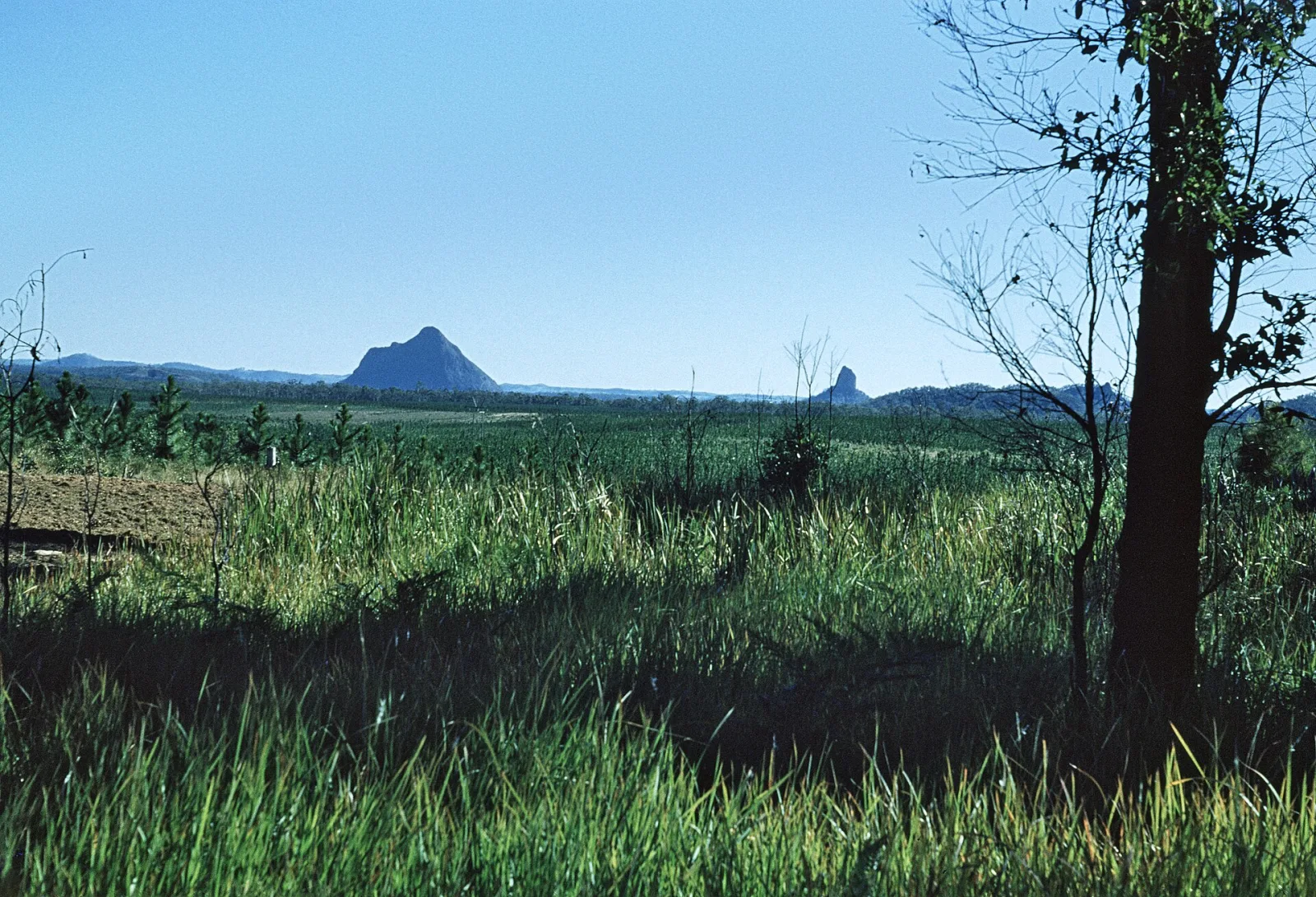
A cluster of thirteen volcanic plugs rising abruptly from the coastal lowlands north of Brisbane, formed around 27 million years ago. The peaks are sacred to the Gubbi Gubbi people and were named by Captain Cook in 1770 because their shapes reminded him of glassmaking furnaces in Yorkshire.
The Glass House Mountains are a group of thirteen volcanic peaks scattered across a flat agricultural and forested landscape between Caboolture and Caloundra on the Sunshine Coast hinterland. The peaks are the remnant cores of volcanoes that erupted around 27 million years ago during the Oligocene period. The softer outer rock has long since eroded, leaving behind the harder trachyte and rhyolite plugs that now stand as dramatic vertical columns above the surrounding plains.
The most recognisable peak is Mount Coonowrin (also known as Crookneck), a 377 metre spire that is one of the most photographed landforms in south-east Queensland. Mount Beerwah is the tallest at 556 metres and is the traditional mother figure in Gubbi Gubbi Dreaming stories, with the surrounding peaks cast as her children. Mount Tibrogargan (364 metres) is the father. Climbing Mount Beerwah requires scrambling skills and is only recommended for experienced bushwalkers, while Mount Ngungun (253 metres) offers a gentler but still rewarding ascent with panoramic views of the surrounding peaks and the coast.
The mountains are of deep cultural significance to the Gubbi Gubbi (also spelled Kabi Kabi) people, the traditional owners of this part of the Sunshine Coast hinterland. The peaks feature prominently in Dreaming stories about a family of mountain spirits, and several of the summits are registered cultural heritage sites. Visitors are asked to respect closures and signage relating to cultural protocols.
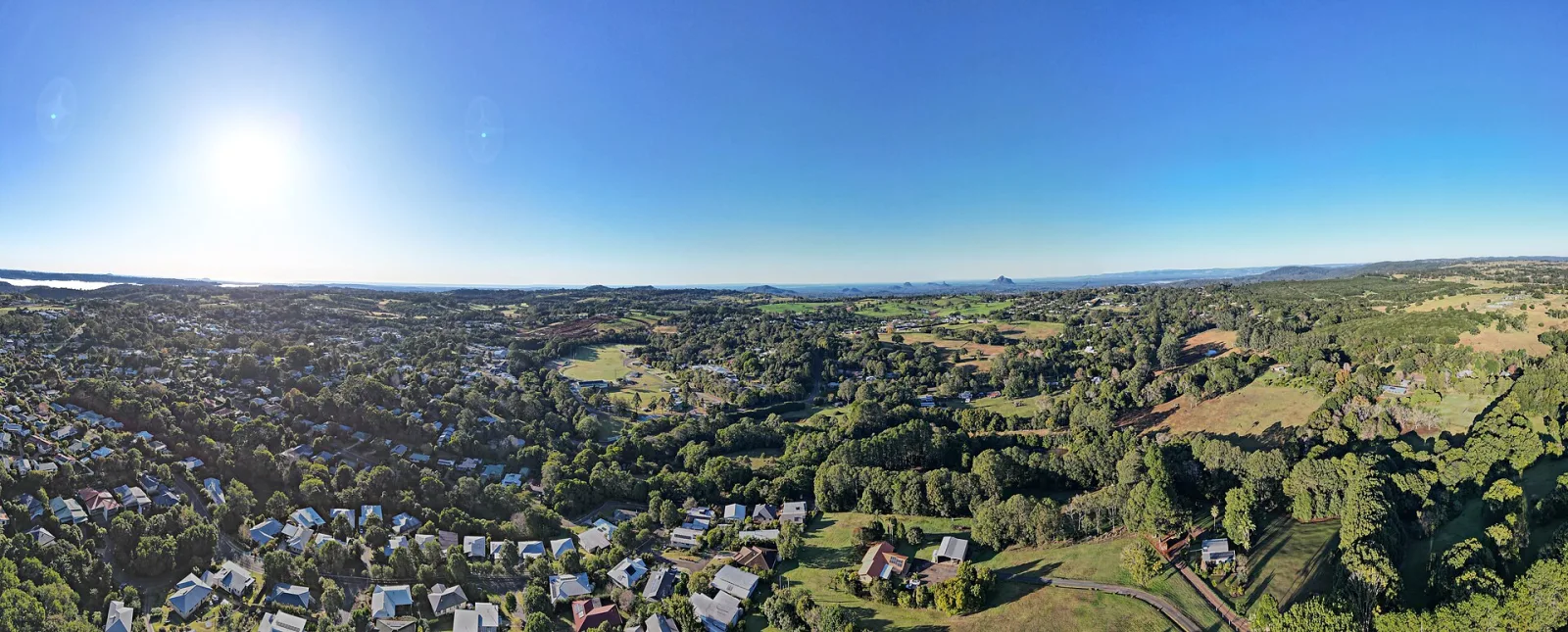
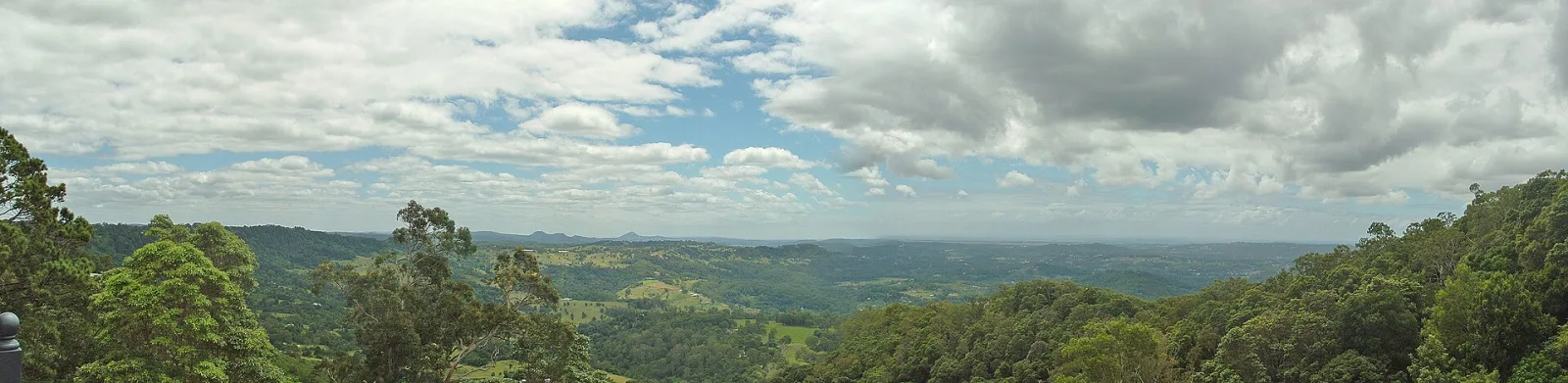
The Glass House Mountains National Park protects much of the bushland around the base of the peaks, with several well-maintained walking tracks offering close-up views. The Wild Horse Mountain Lookout on the Bruce Highway gives the classic panoramic view of the entire group. The town of Glass House Mountains sits at the foot of the range and serves as the main access point, with cafes, a small visitor centre and connections to the extensive hinterland trail network.
The region is pleasant year-round, though autumn and winter provide the clearest skies for photography. Early mornings often deliver mist sitting in the valleys between the peaks, which is a favourite condition for landscape photographers. The mountains are roughly an hour north of Brisbane, making them one of the most accessible natural landmarks in south-east Queensland.
Where to stay
Holiday parks near Glass House Mountains.
1 option via our booking partner

Bookings handled by our partner Parkbooker. We may earn a commission at no extra cost to you.

Scenic views
Lookouts near Glass House Mountains.
You may also like

Attribution
Sources & credits
Content (1)
Images (3)
- Beerwah Pine Forest QUT-7224.jpg · Jack Bain · CC BY 4.0
- North Coast (now Sunshine Coast) hinterland with the Glassho... · Queensland State Archives · Public domain
- Sunset over the Glasshouse Mountains.jpg · Lucbruna · CC BY-SA 4.0

_hinterland_with_the_Glasshouse_Mountains_in_the_background,_1971.jpg)

Images sourced from Wikimedia Commons under licenses that permit commercial use. If you are the rights holder and believe an attribution is incorrect, please contact us.