
Two Peoples Bay
A nature reserve where a bird presumed extinct was rediscovered in 1961
schedule 2 min read / Updated Apr 2026
A coastal nature reserve 35 kilometres east of Albany where the noisy scrub-bird, a species presumed extinct for 72 years, was rediscovered in 1961. The reserve protects dense coastal scrub and granite headlands overlooking a spectacular bay, and is one of the most important wildlife conservation sites in Australia.
Two Peoples Bay Nature Reserve covers around 47 square kilometres of coastal scrub, heath and granite headland country on the south coast of Western Australia, east of Albany. The reserve was established in 1967 after one of the most remarkable wildlife discoveries of the twentieth century: in 1961 a birdwatcher named Hargreaves identified the call of the noisy scrub-bird (Atrichornis clamosus) in the dense scrub here, a species that had not been seen since 1889 and was widely assumed extinct.
The rediscovery triggered an immediate conservation response. The proposed town development at Two Peoples Bay was cancelled and the land was declared a nature reserve. A careful breeding and translocation program has since increased the noisy scrub-bird population from an estimated 40 birds in 1961 to over 1,500 today, spread across several protected sites in the region. Visitors are unlikely to see the bird, which is small, brown and secretive, but its loud territorial call can sometimes be heard along the Heritage Trail.
The reserve is also home to the Gilbert's potoroo, the world's rarest marsupial, which was itself rediscovered here in 1994 after being thought extinct for over a century. A small population of around 100 animals survives in the dense coastal scrub, making Two Peoples Bay one of the most critically important wildlife reserves in Australia.
The walking trails offer more immediate rewards for casual visitors. The Heritage Trail is a 5 kilometre return walk that runs from the car park to Little Beach, one of the most beautiful small beaches on the south coast. The bay itself is a sweeping crescent of white sand backed by granite headlands and is sheltered enough for safe swimming on calm days. The longer Whalers Walk continues around the headland to viewpoints over the open Southern Ocean.
Access is via a sealed road from Albany. There is no entry fee but vehicle numbers are limited to protect the reserve. Pets are not permitted at any time. The reserve is best visited in spring (September to November) when the heath wildflowers are in bloom and the scrub-birds are most vocal.
Scenic views
Lookouts near Two Peoples Bay.
You may also like

Albany

Stirling Range National Park
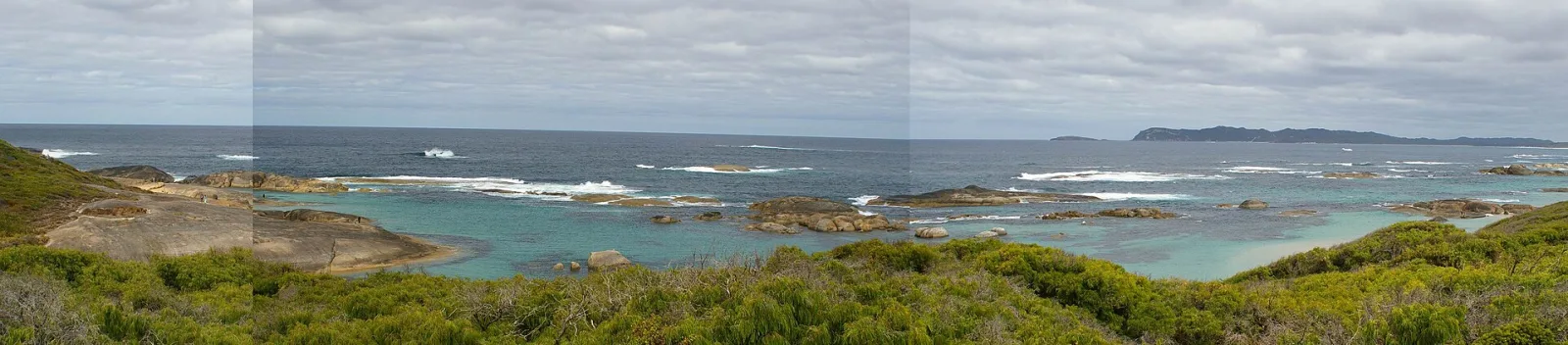
Denmark
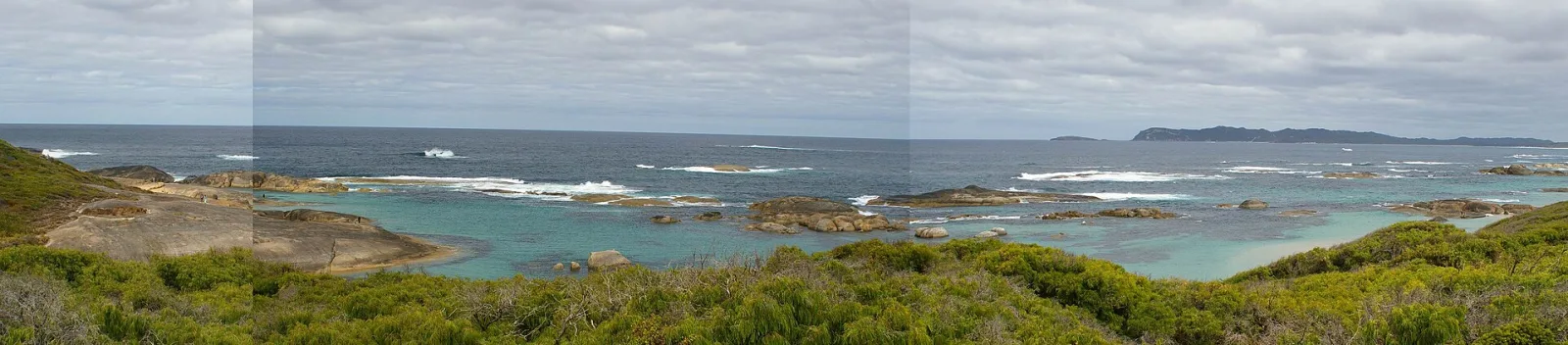
Greens Pool

Cape Le Grand National Park

Geraldton

Exmouth
Karratha and the Pilbara Coast

Monkey Mia

Yanchep
Rottnest Island

Coral Bay
Attribution
Sources & credits
Content (1)
Images (3)
- Blueskin Bay banner.jpg · Alistair Paterson from Dunedin, New Zealand · CC BY-SA 2.0
- Civil Affairs partnership, Manda Bay, Kenya, February 2011 (... · US Army Africa from Vicenza, Italy · CC BY 2.0
- Civil Affairs partnership, Manda Bay, Kenya, February 2011 (... · US Army Africa from Vicenza, Italy · CC BY 2.0

.jpg)
.jpg)
Images sourced from Wikimedia Commons under licenses that permit commercial use. If you are the rights holder and believe an attribution is incorrect, please contact us.