Guide · 6 min read
Where to Swim with Giant Cuttlefish in Whyalla: A Complete Guide
Everything you need to know about South Australia's unmissable winter underwater spectacle
Sophie Arrandale · June 2026
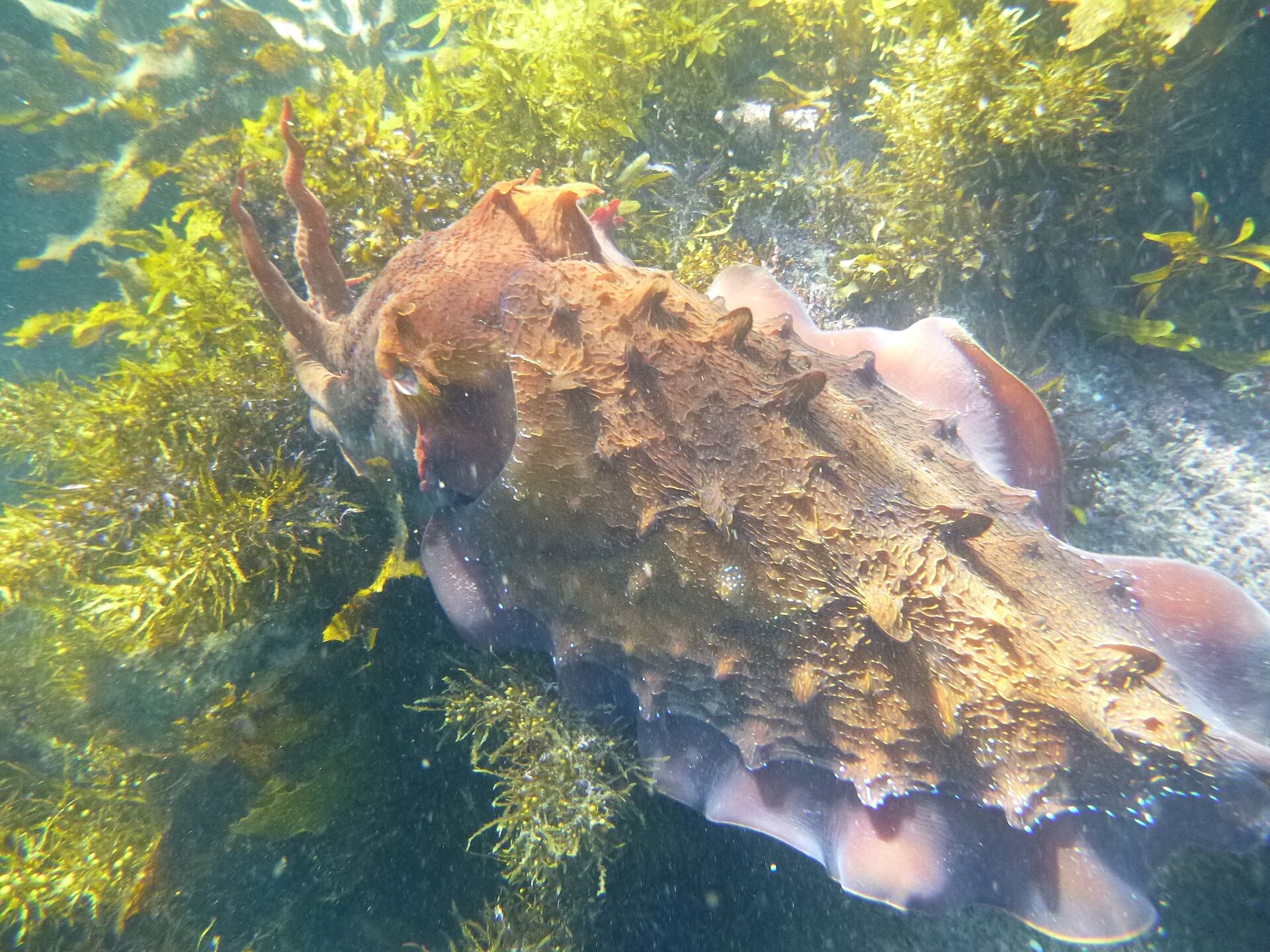
Each winter, thousands of giant Australian cuttlefish converge on the rocky reefs near Whyalla for the world's only known mass spawning aggregation. This guide covers the best season, where to snorkel, tour options, gear essentials, and how to get there from Adelaide.
Why Whyalla Is Unlike Anywhere Else on Earth
Every year, between May and August, something extraordinary happens beneath the cold waters of South Australia's upper Spencer Gulf. Thousands of giant Australian cuttlefish - Sepia apama - converge on a narrow, rocky stretch of coastline near Whyalla to breed. This is the world's only known mass spawning aggregation of the species, a fact confirmed by researchers and the Australian Museum alike. Males outnumber females up to 11 to one, which triggers dazzling competitive displays - pulsating zebra stripes, rippling iridescent colour shifts, and fin waves - that are visible from just a metre away. If you are searching for where to swim with cuttlefish in South Australia, you will not find a more rewarding answer than this.
When to Go: The May to August Season
The aggregation is strictly seasonal. Cuttlefish begin arriving in mid-May as water temperatures drop to around 14 degrees Celsius. Numbers build steadily through June and peak in June and July, when the breeding season is in full swing. By August, numbers start to thin as animals move back into deeper water. If you can only visit once, aim for late June or early July. Mornings generally offer calmer surface conditions and better underwater visibility than afternoons, when wind can stir up sediment. Incoming tides can also push cuttlefish closer to the shoreline, which is worth timing if you are snorkelling independently.
The Two Key Sites: Point Lowly and Stony Point
The breeding grounds stretch for roughly 10 kilometres along the Cuttlefish Coast, running from Fitzgerald Bay around Point Lowly to Black Point and False Bay. The whole zone sits within the Upper Spencer Gulf Marine Park.
Stony Point is the most accessible site and the best choice for most visitors. Located about 20 kilometres northeast of central Whyalla, it has sealed parking, change rooms, toilets, and shelter areas. A boardwalk leads to the water's edge, and a waist-height chain provides support as you step over the rocky entry point - a practical feature in thick wetsuit gloves. Cuttlefish can appear in less than a metre of water here, so even cautious swimmers can get close.
Point Lowly lies further around the peninsula and is where several guided tours depart from. The Point Lowly Marina is the launch point for Spencer Gulf Adventures glass bottom boat tours. Conditions around the point can be slightly more exposed, so it is worth checking conditions before committing to an independent entry at this location.
How to Experience It: Snorkelling, Diving, and Glass Bottom Boat
Independent Snorkelling
Snorkelling at Stony Point is free and self-guided. You simply need the right gear, a buddy, and an awareness of the marked safety buoys - stay within the designated zone and watch for boat traffic. Cuttlefish in shallow water are remarkably tolerant of calm snorkellers. Move slowly, avoid touching the animals, and retreat gently if one changes colour dramatically, as this signals stress.
Guided Snorkel and Dive Tours
Several operators run guided experiences that include equipment and a briefing:
- Diving Adelaide offers guided snorkel sessions for adults ($125, all gear included) and children aged 12 and over ($99), as well as guided scuba dives for PADI-certified divers ($149). Sessions last around two hours. Minimum age for snorkelling is 12 years.
- Why Dive / Whyalla Diving Services has operated guided snorkel and dive tours for over 30 years and also hires out gear if you prefer to explore independently. Booking gear hire in advance is strongly recommended during peak season.
- Experiencing Marine Sanctuaries (EMS) runs tours during the CuttleFest festival period and caters to beginner snorkellers with educational in-water briefings.
Glass Bottom Boat
Not keen on getting cold? Spencer Gulf Adventures operates the Freedom Explorer, an eight-metre glass bottom boat carrying up to 20 passengers. Departing from the Point Lowly Marina, tours run from May through August 2026. The vessel uses crystal-clear viewing panels so guests stay warm and dry while watching cuttlefish on the reef below. Contact Spencer Gulf Adventures on 0407 975 243 or via their website for current pricing and departure times.
What to Wear and Bring
The water temperature sits between 11 and 14 degrees Celsius throughout the season - cold by any measure. Gear requirements are non-negotiable:
- Wetsuit: a full-length 5mm suit is the minimum; 7mm is strongly recommended for sessions longer than 30 minutes
- Hood: essential - a bare head loses heat fast in these temperatures
- Gloves and boots: protect hands and feet and improve comfort over rocky entry points
- Mask and snorkel: hire available from Whyalla Diving Services if you do not own your own
- Fins: optional for Stony Point's shallow water but useful if currents pick up
- Waterproof camera: the colour displays are extraordinary and easy to capture even with an entry-level underwater housing
If you are hiring gear, book ahead. During peak season in June and July, equipment hires fill up quickly, particularly on weekends.
Getting to Whyalla from Adelaide
Whyalla is approximately 385 kilometres north of Adelaide via the Augusta Highway (A1). The drive takes around four hours and 15 minutes in normal conditions. From Whyalla's city centre, Stony Point is a further 30-minute drive northeast along Port Bonython Road.
If you prefer not to drive, Rex Airlines and Qantas Regional offer direct flights from Adelaide Airport to Whyalla Airport in around 50 minutes. From Whyalla, a hire car is the most practical way to reach Stony Point independently.
Plan to stay at least one night - morning snorkels are far more rewarding than rushed afternoon visits, and a second morning in the water dramatically increases your chances of witnessing a full competitive display.
Practical Tips Before You Go
- Check conditions at the Whyalla Visitor Centre before heading to the water
- The sanctuary zone rules prohibit touching, collecting, or disturbing cuttlefish - treat the experience as pure observation
- CuttleFest, an annual festival centred on the aggregation, typically runs in late June and early July and includes guided snorkel events, photography workshops, and community activities
- Cuttlefish live for only two to four years, and each animal you see during breeding season will die within months - the individual stakes of this aggregation make respectful observation all the more important
Sources