Great Barrier Reef
The Living Cathedral
On the lands of the More than 70 Traditional Owner groups along the coast people.
schedule 3 min read / Updated Apr 2026
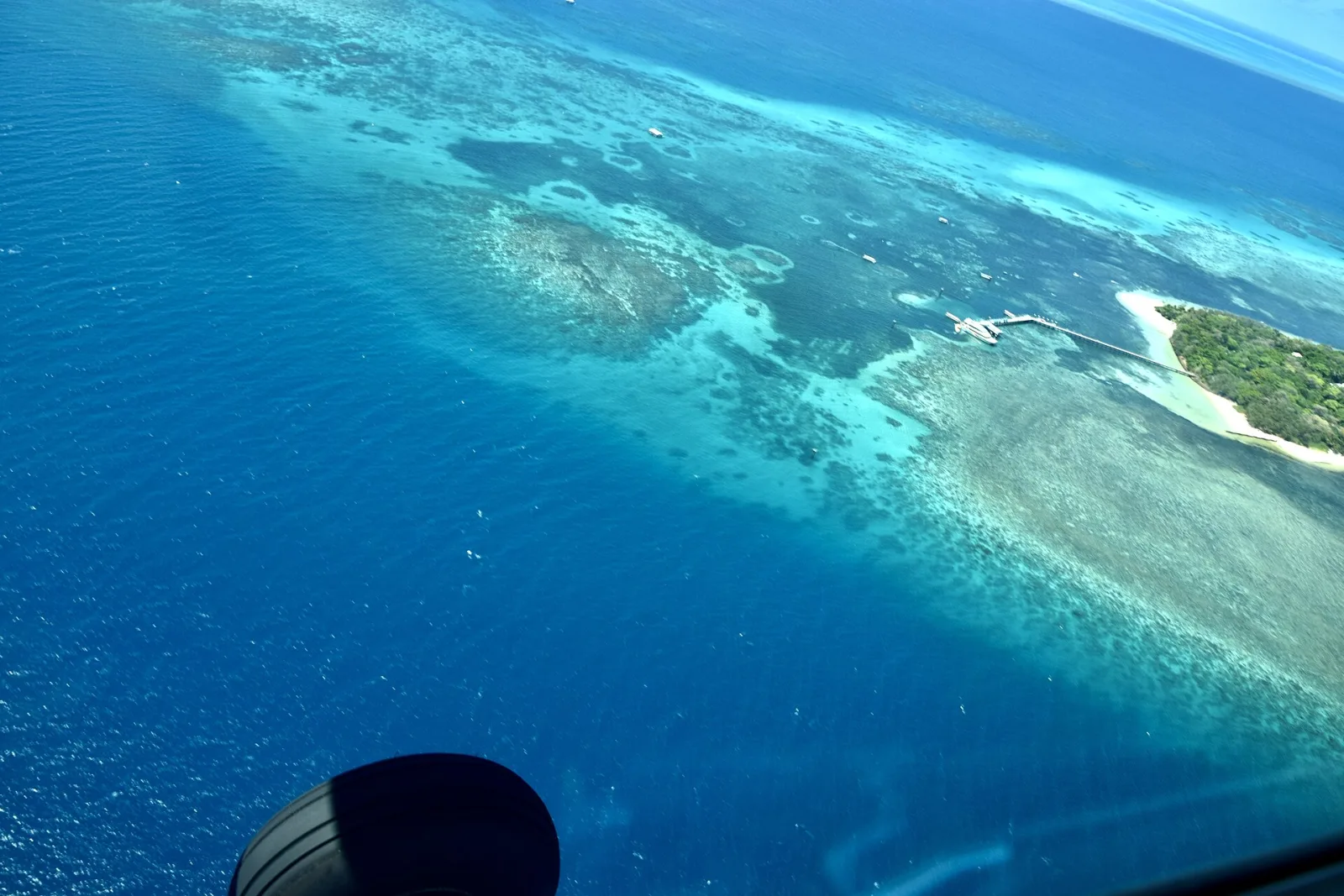
The largest coral reef system on earth, stretching over 2,300 kilometres along the Queensland coast and covering an area larger than the United Kingdom. The Great Barrier Reef is the only living structure visible from space and home to around 9,000 identified species.
The Great Barrier Reef runs from the tip of Cape York Peninsula in the north to Bundaberg in the south, covering an area of approximately 344,400 square kilometres. It is made up of nearly 3,000 individual reefs, 900 islands and countless cays, all built by tiny coral polyps over an estimated 20 million years. The current reef structure you see today started forming about 20,000 years ago on top of much older foundations.
The reef was inscribed on the UNESCO World Heritage list in 1981 as one of the most biologically complex ecosystems on the planet. It is home to more than 1,500 species of fish, 400 species of hard coral, 4,000 species of mollusc, six of the world's seven species of marine turtle, 30 species of whale and dolphin, and around 215 species of bird. The sheer scale of the biodiversity is what makes it unique, even compared to other tropical reef systems.
Most visitors access the reef from one of three gateway cities: Cairns, Port Douglas and Airlie Beach. Cairns and Port Douglas put you on the northern outer reef within 90 minutes by boat, while Airlie Beach is the jumping-off point for the Whitsunday Islands and their protected inner-reef lagoons. Each base has different strengths. Cairns has the most operators and the cheapest day trips, Port Douglas has a more curated scene and better access to Ribbon Reefs, and Airlie gives you the island-hopping option.
For serious divers, the Cod Hole, the Ribbon Reefs and Osprey Reef (technically Coral Sea, just outside the barrier reef) are among the best sites in the world. Day divers will see reef sharks, turtles, giant clams and maori wrasse on almost any outer-reef trip. Liveaboard multi-day trips from Cairns go further north to sites that day boats cannot reach, and are the only way to see the famous dwarf minke whales in June and July.
Snorkelling from a pontoon is the easiest introduction. Most day tours include pontoon time at an outer-reef site where non-swimmers can use a glass-bottom boat or semi-submersible without getting wet. Some of the better tours include underwater observatories and marine-biology talks, and the standout operators are booked weeks in advance during peak season.
The reef faces well-documented pressures from climate change, with mass bleaching events recorded in 1998, 2002, 2016, 2017, 2020, 2022 and 2024. Sections of the northern reef have been hit hardest, though the central and southern sections have remained largely healthy. The Australian Institute of Marine Science publishes annual condition reports, and responsible operators have shifted their routes to healthier reef sections and contribute to active restoration projects.
The best months for visiting are June to October. Water is clear, conditions are calm, stingers are absent, and visibility is reliably 15 to 30 metres. November to May is the wet-season window when stinger suits become standard and the afternoon storms can cancel trips, but water temperatures are warmer and marine life is more active. Coral spawning, one of the most extraordinary events on the reef, happens each year over a few nights in October or November on a full moon.
Common questions
Things visitors ask about Great Barrier Reef.
Quick answers to help you plan.
Where do most people depart from to visit the Great Barrier Reef?
expand_more
The four main launch points are Cairns, Port Douglas, Airlie Beach and the Whitsundays. Cairns is the busiest hub with the widest choice of day boats to the Outer Reef, Port Douglas sits closer to the Agincourt ribbon reefs (about 40 minutes by fast catamaran), and Airlie Beach is the gateway to the Whitsunday Islands and Heart Reef. Pick the port nearest the kind of trip you want: pontoons and dive day-boats from Cairns, premium small-group reef trips from Port Douglas, or sailing and island-hopping from the Whitsundays.
When is the best time of year to visit the Great Barrier Reef?
expand_more
The dry season from June to October is generally considered the best window, with warm days around 23 to 28 degrees Celsius, calmer seas, lower humidity and the clearest underwater visibility. The wet season from November to May brings hotter weather, heavier rain, occasional cyclones and the marine stinger risk in coastal waters. Whale season runs roughly July to November if you want humpbacks alongside your reef trip.
How much does a Great Barrier Reef day trip cost?
expand_more
A standard full-day snorkelling trip to the Outer Reef from Cairns or Port Douglas usually costs around $230 to $330 per adult in 2026, with most operators including lunch, snorkel gear and a reef guide. Half-day trips and inner-reef island trips start from about $90 to $150, while premium small-group, dive-included or pontoon experiences run $300 to $500 plus. Add-ons like an introductory scuba dive, a wetsuit hire or a helicopter return flight are usually charged on top.
What is the reef tax or Environmental Management Charge?
expand_more
Almost every commercial reef trip includes the Environmental Management Charge (EMC), a per-passenger fee collected by operators on behalf of the Great Barrier Reef Marine Park Authority. The charge is reviewed each year against the Brisbane CPI and currently sits at about $6 to $8 per adult per day, going directly to reef management, research and ranger patrols. Children under 4 are exempt and the fee is usually shown as a separate line on your booking.
Is the reef still worth visiting after the recent coral bleaching?
expand_more
Yes. The reef has been hit by mass bleaching events in both 2024 and 2025, with the worst impacts on northern offshore reefs between Cooktown and Cape York where average coral cover dropped by about a quarter in 2025. However, the system covers 2,300 kilometres and 3,000 individual reefs, so most tourism sites near Cairns, Port Douglas and the Whitsundays still have abundant coral, fish and turtles. Visiting with a high-standard tourism operator also directly funds reef monitoring and recovery.
When is stinger season and how dangerous is it?
expand_more
Marine stinger season in tropical Queensland runs roughly from November to May, when box jellyfish and the much smaller Irukandji can be present in coastal waters. Reputable reef operators provide a free full-body lycra stinger suit during this period, which gives near-complete protection while you snorkel or dive. Keep vinegar in mind for first aid on beaches, swim between the flags inside stinger nets where provided, and call Triple Zero (000) if anyone is stung and unwell.
Can non-swimmers and young children still see the reef?
expand_more
Absolutely. Most large day-boats and reef pontoons offer glass-bottom boat tours, semi-submersible viewing rides and underwater observatories so you can see coral, fish and turtles without getting wet. Many operators also provide pool noodles, life jackets and flotation vests for nervous swimmers, and protected lagoons on islands like Green, Fitzroy and Lady Musgrave are ideal for kids.
How far is the reef from the mainland and how long does the boat trip take?
expand_more
The Great Barrier Reef sits between roughly 30 and 250 kilometres off the Queensland coast, depending on where you go. From Port Douglas the Outer Reef is about 40 to 90 minutes by fast catamaran, from Cairns it is typically 90 minutes to 2 hours, and Whitsundays day trips to reefs like Hardy and Bait usually take around 2 hours each way. Sea-sickness tablets taken 30 minutes before departure are a good idea even on calm days.
Do I need a wetsuit, and how do I avoid sunburn?
expand_more
A wetsuit is not essential in the warmer months when sea temperatures sit around 25 to 29 degrees, but a lycra suit or shorty wetsuit is strongly recommended year-round to protect against sun, scrapes and stingers. Operators hire wetsuits from about $8 to $15. Apply reef-friendly sunscreen well before you board, wear a rash shirt while snorkelling, and reapply between swims because the tropical UV is extreme even on overcast days.
What can I do to help protect the reef while visiting?
expand_more
Follow your guide's briefing and never stand on, touch or kick coral, even accidentally with fins. Keep a respectful distance from turtles, reef sharks and giant clams, take all rubbish back to the boat, and choose a High Standard Tourism Operator certified by the Reef Authority where possible. Using mineral-based, reef-friendly sunscreen and skipping souvenirs made from coral or shell also makes a real difference.
Gallery
Great Barrier Reef in pictures.
10 images licensed from Wikimedia Commons
All images are sourced from Wikimedia Commons under Creative Commons licences. Individual photographers are credited on the source pages.
On the itinerary
Trip plans that include Great Barrier Reef.

Featured in
Shortlists that include Great Barrier Reef.

You may also like
Nelly Bay
Mount Isa
Alberton
Hinchinbrook Island

Magnetic Island

Whitehaven Beach
Stanthorpe

Harrisville

Whitsunday Islands

Heron Island
Currumbin Adventure Park

Green Island
Attribution
Sources & credits
Content (5)
- Wikipedia: Great Barrier Reef · CC BY-SA 4.0
- Environmental Management Charge: what are the charges? · Great Barrier Reef Marine Park Authority · CC BY 4.0
- Reef health updates · Great Barrier Reef Marine Park Authority · CC BY 4.0
- Responsible reef practices · Great Barrier Reef Marine Park Authority · CC BY 4.0
- Annual summary report of coral reef condition 2024/25 · Australian Institute of Marine Science · CC BY 4.0
Images (10)
- Great Barrier Reef off Cairns coast (Ank Kumar) 02.jpg · Ank Kumar · CC BY-SA 4.0
- Great Barrier Reef off Cairns coast (Ank Kumar) 04.jpg · Ank Kumar · CC BY-SA 4.0
- Great Barrier Reef off Cairns coast (Ank Kumar) 05.jpg · Ank Kumar · CC BY-SA 4.0
- The Great Barrier Reef, Off Cairns Coast (Ank Kumar) 03.jpg · Ank Kumar · CC BY-SA 4.0
- Great Barrier Reef off Cairns coast (Ank Kumar) 07.jpg · Ank Kumar · CC BY-SA 4.0
- Great Barrier Reef off Cairns coast (Ank Kumar) 08.jpg · Ank Kumar · CC BY-SA 4.0
- The Great Barrier Reef, Off Cairns Coast (Ank Kumar) 01.jpg · Ank Kumar · CC BY-SA 4.0
- The Great Barrier Reef, Off Cairns Coast (Ank Kumar) 04.jpg · Ank Kumar · CC BY-SA 4.0
- The Great Barrier Reef off Cairns Coast (Ank Kumar) 01.jpg · Ank Kumar · CC BY-SA 4.0
- The Great Barrier Reef off Cairns Coast (Ank Kumar) 02.jpg · Ank Kumar · CC BY-SA 4.0
_02.jpg)
_04.jpg)
_05.jpg)
_03.jpg)
_07.jpg)
_08.jpg)
_01.jpg)
_04.jpg)
_01.jpg)
_02.jpg)
Images sourced from Wikimedia Commons under licenses that permit commercial use. If you are the rights holder and believe an attribution is incorrect, please contact us.