Mount Isa
Kalkatunga
Australia's outback mining capital - where red-dirt grit, ancient fossils and the Southern Hemisphere's wildest rodeo collide.
On the lands of the Kalkadoon (Kalkatungu) people people.
schedule 3 min read / Updated Jun 2026
Rising from the rust-red plains of outback Queensland, Mount Isa is one of Australia's most remote and remarkable cities - a place whose entire existence was conjured from the ground up by the discovery of extraordinary mineral wealth in 1923. Straddling the Leichhardt River some 900 kilometres west of Townsville, this resilient city of around 18,000 people carries the swagger of a true frontier town, shaped by hard labour, wide horizons and a fiercely proud community spirit. From its World Heritage-listed fossil treasures and underground mine tours to the thundering spectacle of the Southern Hemisphere's largest rodeo, Mount Isa rewards the curious traveller with experiences that are impossible to replicate anywhere else on earth.
The Kalkadoon (Kalkatungu) people have called this rugged country home for more than 40,000 years, developing one of the most significant stone tool production and trade networks in the Lake Eyre Basin long before European contact. Their story took a tragic turn in 1884 when colonial settlers and police massacred their warriors at Battle Mountain - an act now recognised as one of the fiercest acts of Aboriginal resistance in Queensland's history. Today the Kalkadoon Native Title Aboriginal Corporation RNTBC holds native title over the region, and visitors are encouraged to engage with the deep cultural heritage that underpins every red hill and dry creek bed in the landscape.
Modern Mount Isa was born on 22 January 1923, when prospector John Campbell Miles pegged claims over ore deposits that would prove to be among the richest on the planet. Mount Isa Mines grew to become one of the world's most productive single mines, extracting copper, silver, lead and zinc beneath a flat outback skyline punctuated by the iconic 270-metre lead smelter stack. After more than a century of continuous production, Glencore closed the underground copper operations in 2025 following declining ore reserves and high production costs - closing a chapter that defined the city's identity, but opening space for a new era anchored in tourism, heritage and economic diversification.
The single most spectacular reason to time a visit carefully is the Mount Isa Mines Rodeo, held every August at Buchanan Park. Running since 1959, it is the largest rodeo in the Southern Hemisphere, drawing up to 40,000 spectators and some 750 competitors from across Australia and overseas to contest bull riding, saddle bronc, bareback, ladies barrel racing, team roping and more. Prize money exceeds $20,000 per open buckle event, and the event has gifted more than $6 million to charities in north-west Queensland over its history. For a few days in August, the city's population effectively triples and the dusty arena roars with a noise and energy unlike anything else in Australian outback tourism.
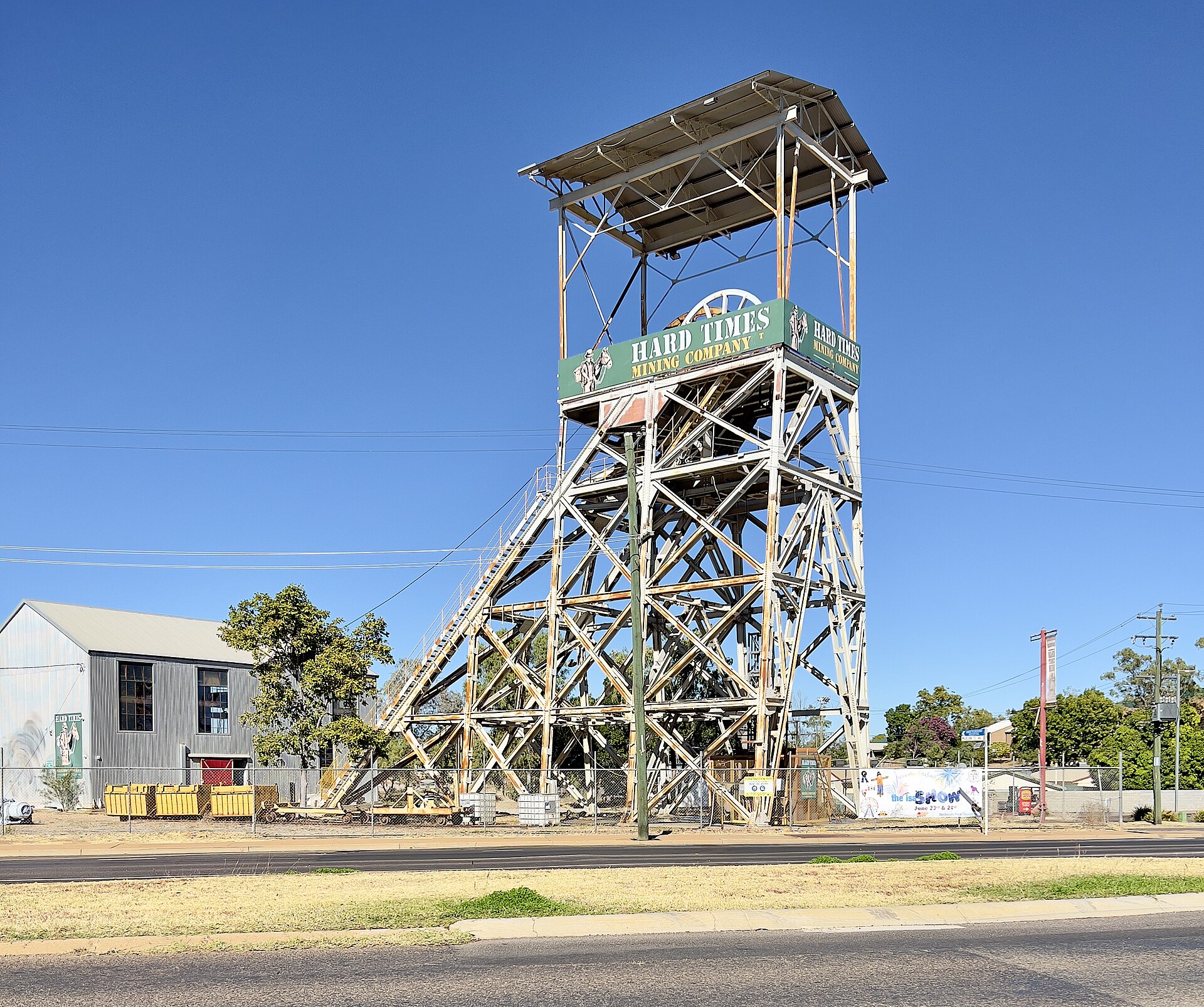
Just as compelling for those drawn to deeper time is the Riversleigh World Heritage Area, a UNESCO-listed fossil site north-west of the city that documents 25 million years of Australian megafauna evolution with extraordinary completeness. The Riversleigh Fossil Discovery Centre at Outback at Isa in town brings these ancient creatures to life through interactive displays, an immersive diorama and guided laboratory tours ($38 per adult for a guided experience). The adjacent Hard Times Mine Tour descends into a replica underground mine, letting visitors try an air-leg drill and grasp the sheer physical demands faced by generations of miners ($56 per person). Nearby Lake Moondarra, an artificial reservoir 19 kilometres north of the city, offers a welcome oasis of birdwatching, kayaking and sunset photography against a backdrop of low ranges glowing ochre and violet in the fading light.
The best time to visit is between May and August, when the dry season brings clear skies and daytime temperatures in the mid-20s Celsius - a sharp contrast to the scorching 36-38 degree summer highs and humid wet-season storms of December to March. The city is accessed directly by sealed road on the Barkly and Flinders highways, and Mount Isa Airport (ISA) receives daily flights from Brisbane, Cairns and Townsville via Qantas, QantasLink, Rex Airlines and Virgin Australia. Allow at least two to three days to scratch the surface - longer if the rodeo coincides with your trip or if a drive out to the Riversleigh fossil fields themselves is on the itinerary.
Scenic views
Lookouts near Mount Isa.
You may also like
Winton
Muriel Henchman Public Pontoon
Birdsville
Mapleton Falls
Tamborine

Lady Elliot Island

Heron Island
Tamborine Mountain

Yeppoon
Southport
Tasman Venture

Scenic Rim
Attribution
Sources & credits
Content (1)
Images (3)
- Hard Times Mining Company, Barkly Highway in Mount Isa, Quee... · Kgbo · CC BY-SA 4.0
- Isa Hotel, Mount Isa, Queensland, 2023, 19.jpg · Kgbo · CC BY-SA 4.0
- Mount Isa, Queensland, 2023, 01.jpg · Kgbo · CC BY-SA 4.0


Images sourced from Wikimedia Commons under licenses that permit commercial use. If you are the rights holder and believe an attribution is incorrect, please contact us.