Watarrka National Park
Watarrka
Ancient sandstone walls, a hidden oasis, and 20,000 years of living culture in Australia's Red Centre.
On the lands of the Luritja and Western Arrernte peoples people.
schedule 3 min read / Updated Jun 2026
Watarrka National Park protects one of Central Australia's most dramatic landscapes - a 1,052-square-kilometre sanctuary built around Kings Canyon, where sheer sandstone walls rise up to 300 metres above a sheltered gorge floor. The park takes its name from the Luritja word for the umbrella bush (Acacia ligulata) that dots the plateau, and it has been the living homeland of the Luritja and Western Arrernte peoples for more than 20,000 years. Set approximately 450 kilometres south-west of Alice Springs in the Petermann region, Watarrka is a place where ancient geology, rare desert flora, and deep Aboriginal culture converge in a way found nowhere else in Australia.
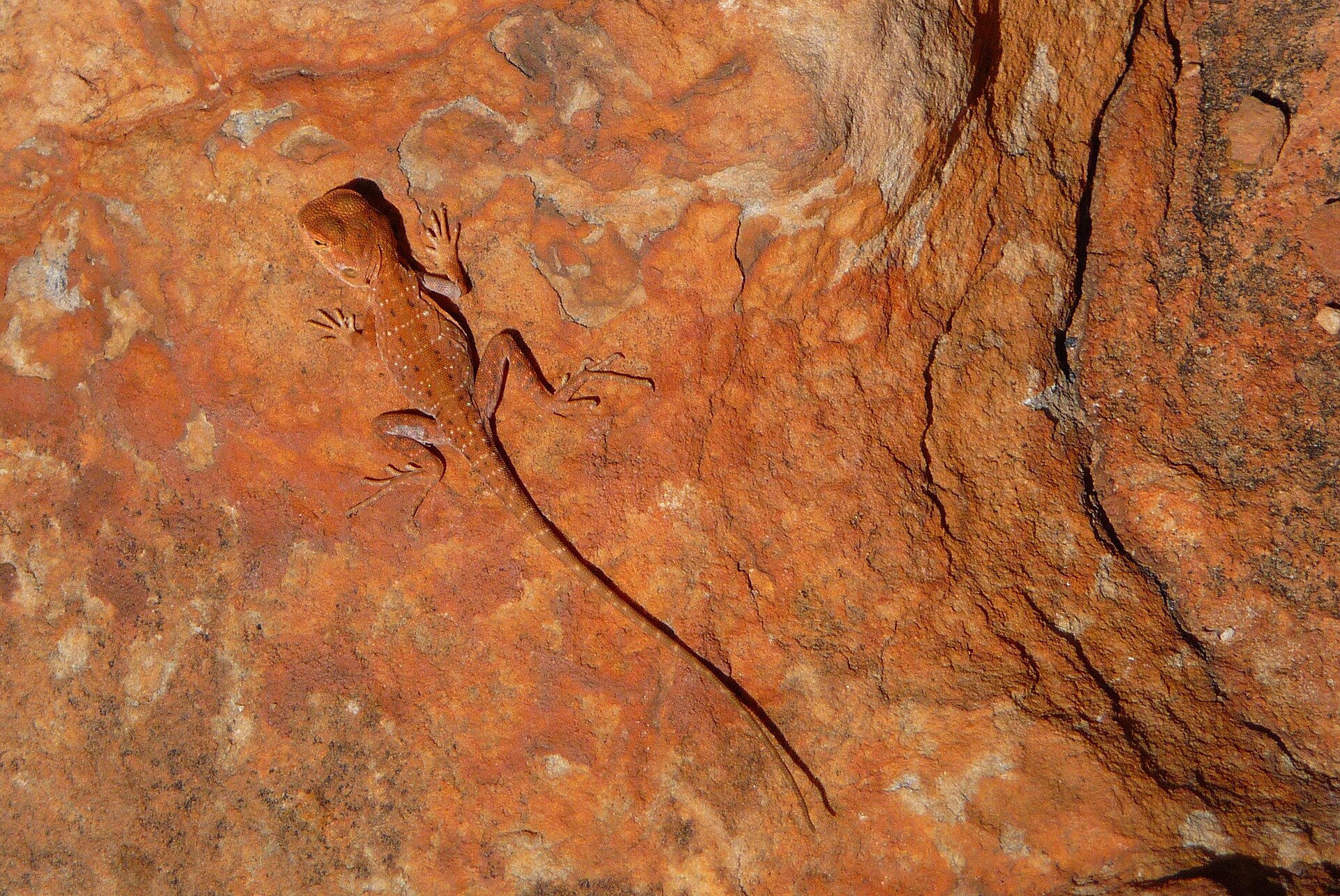
The centrepiece of any visit is the Kings Canyon Rim Walk, a 6-kilometre loop that begins with a demanding climb up the canyon's steep southern wall before levelling out onto an exposed plateau of wind-sculpted sandstone domes. Known as the Lost City, these rounded formations were shaped over hundreds of millions of years as water eroded the Mereenie Sandstone - rock laid down some 400 to 440 million years ago when this part of the continent lay beneath a vast inland sea. From the rim, walkers are rewarded with sweeping 360-degree views across red dune country that stretches to the horizon in every direction.\n\nDescending into the heart of the canyon reveals one of the outback's most astonishing secrets - the Garden of Eden. Fed by permanent waterholes and shielded from the desert heat by towering canyon walls, this sheltered pocket supports a remarkable refugial plant community including ancient cycad palms (Macrozamia macdonnellii), native ferns, and mosses that are living relics of a wetter climate that blanketed Central Australia millions of years ago. The contrast between the bone-dry plateau above and this lush, green sanctuary below is startling, and it remains one of the most photographed spots in the Northern Territory.\n\nBeyond the rim walk, the park rewards those who explore further. The easy Kings Creek Walk (2.6 kilometres return) follows the shaded creek bed to a natural amphitheatre, offering a gentler introduction to the canyon's scale without the strenuous climb. The multi-day Giles Track extends 22 kilometres through the George Gill Range to Kathleen Springs, a permanent waterhole fringed by white-barked ghost gums that also marks the eastern boundary of the park. Kathleen Springs is fully paved and accessible by wheelchair and pram, making it a welcoming destination for visitors of all abilities.\n\nThe park holds deep cultural significance for the Luritja and Western Arrernte peoples, whose connection to this country stretches back over 20,000 years. Ancient rock art and paintings created by the Traditional Owners are preserved throughout the park, and Watarrka is jointly managed by the community and the Parks and Wildlife Commission of the Northern Territory. The 1994 film "The Adventures of Priscilla, Queen of the Desert" brought international attention to a narrow slot known as Priscilla's Crack on the canyon wall, adding a layer of popular-culture history to the site's already profound heritage.\n\nWatarrka's wildlife is equally compelling. The park's 572 recorded plant species and 80 bird species reflect its status as a biodiversity refuge in an otherwise harsh environment. Desert-adapted reptiles including long-nosed dragons and ring-tailed dragons bask on warm rocks, while flocks of wild budgerigars wheel noisily above the canyon in a flash of bright green. The rim walk is closed when temperatures reach 36 degrees Celsius or above, so timing an early-morning start - particularly in the cooler months from May to September - is essential both for safety and for catching the canyon walls glowing in the golden light of dawn.
Scenic views
Lookouts near Watarrka National Park.
You may also like

Kings Canyon
Alice Springs
Standley Chasm
Tennant Creek

Chambers Pillar
Mary River National Park
MacDonnell Ranges

Katherine
Gunlom Falls
Larapinta Trail

Devils Marbles (Karlu Karlu)

Katherine Gorge (Nitmiluk)
Attribution
Sources & credits
Content (1)
Images (3)
- Ring-tailed Dragon at Watarrka National Park.jpg · Bob Smart · CC BY-SA 4.0
- Spinifex Pigeon 0A2A1585.jpg · JJ Harrison · CC BY-SA 3.0
- ViewFromKingsCanyon.JPG · Toby Hudson · CC BY-SA 3.0


Images sourced from Wikimedia Commons under licenses that permit commercial use. If you are the rights holder and believe an attribution is incorrect, please contact us.