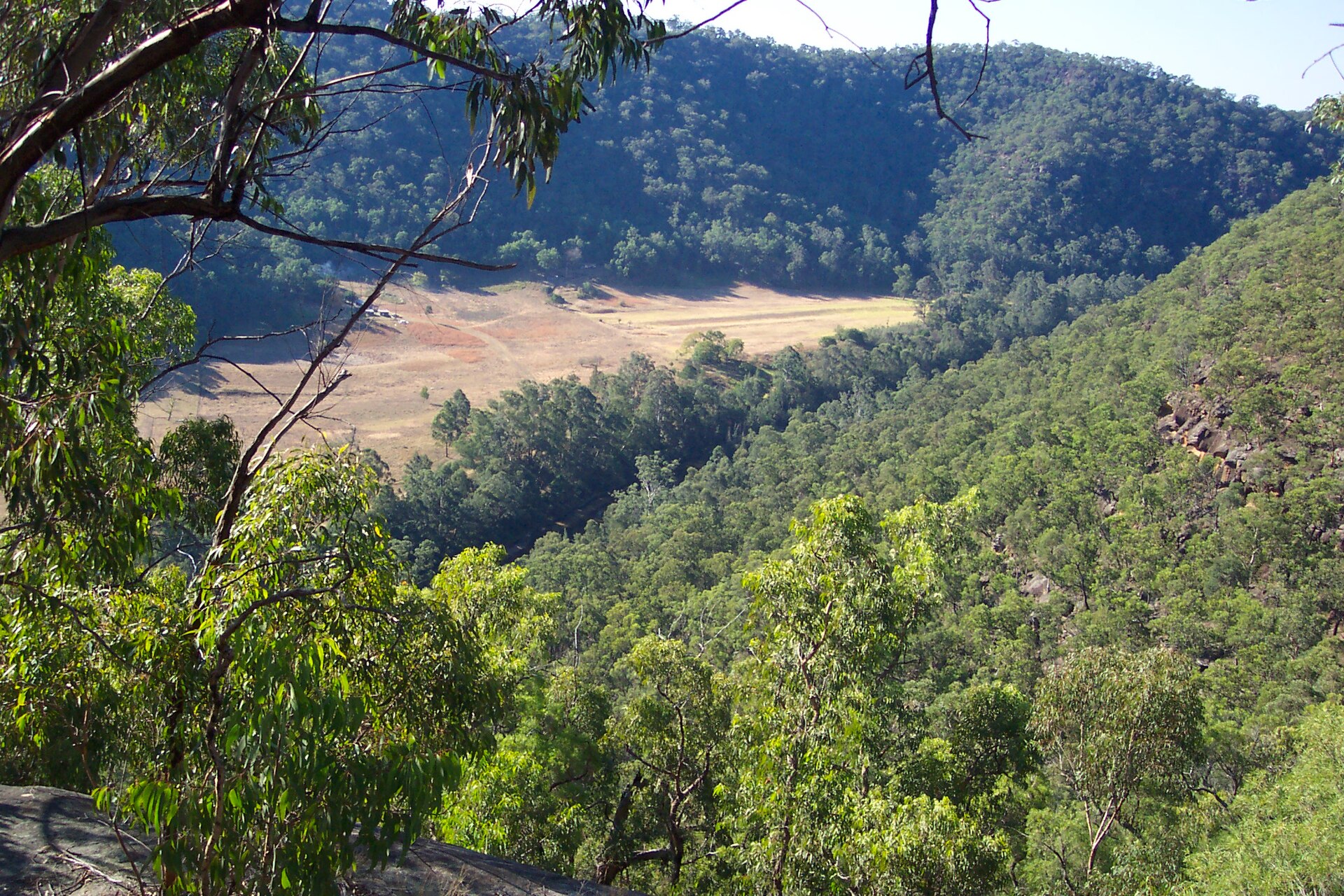
Wollemi National Park
Wollemi
Ancient wilderness, living fossils
On the lands of the Wiradjuri, Darkinjung, Dharug, Wanaruah and Wonnarua peoples people.
schedule 2 min read / Updated Jun 2026
Wollemi National Park spans 501,703 hectares of canyon-cut sandstone wilderness north of the Blue Mountains, forming part of the UNESCO World Heritage-listed Greater Blue Mountains Area. It shelters the Wollemi Pine, a tree species thought extinct for millions of years until its rediscovery in 1994, and contains the largest declared wilderness area in New South Wales, much of it never explored by European settlers.
Wollemi National Park was gazetted in December 1979 and takes its name from an Aboriginal word believed to mean 'watch out' or 'look around you'. Covering more than 500,000 hectares in New South Wales's Central West and Hunter regions, it is the second-largest national park in the state and the largest in the Greater Sydney region. In 2000 it was inscribed as part of the Greater Blue Mountains Area UNESCO World Heritage property, recognised for its outstanding representation of eucalypt diversity and evolutionary biology.
Aboriginal peoples have cared for these lands for at least 12,000 years. The park sits within the traditional Country of the Wiradjuri, Darkinjung, Dharug, Wanaruah, and Wonnarua peoples, and around 120 recorded Aboriginal heritage sites survive throughout the park. Rock engravings, grinding grooves, scarred trees, stone arrangements, and ceremonial grounds attest to a long and ongoing cultural relationship with this landscape. The rugged terrain means that many more sites likely remain unrecorded in unexplored gorges.
The centrepiece of the park's wilderness is the 361,113-hectare Wollemi Wilderness, the largest designated wilderness area in New South Wales and one of the largest in south-eastern Australia. The Colo River has carved what is reputedly the longest gorge in NSW through layers of Triassic and Permian sandstone, producing a labyrinth of slot canyons, towering escarpments, and pagoda rock formations, flat-topped pillars of eroded stone that catch golden light at dusk. Many of the park's inner canyons remain unexplored, accessible only to experienced technical canyoners.
The 1994 discovery of the Wollemi Pine shocked the scientific world. Known previously only from fossils up to 200 million years old, the species was thought to have been extinct for at least two million years. Field officers from NSW National Parks stumbled upon a stand of trees growing in a remote canyon, its exact location kept secret for protection, and subsequent surveys found fewer than 100 trees in the wild. Classified as critically endangered, the Wollemi Pine is now cultivated around the world, but its wild population survives only here. Visitors can see cultivated specimens at a designated display site near Lithgow without disturbing the wild population.
Beyond the pine, the park shelters extraordinary biodiversity. Eucalypt forests blanket ninety per cent of the park, with more than 70 eucalypt species recorded. Over 235 bird species have been sighted, including the critically endangered regent honeyeater and the vulnerable glossy black cockatoo. Eastern grey kangaroos, red-necked wallabies, brush-tailed rock wallabies, and broad-headed snakes move through the forest. Popular visitor experiences include the Glow Worm Tunnel, a hand-hewn railway tunnel built in the 1900s now lit by thousands of bioluminescent larvae, canoeing the calm waters of Ganguddy (Dunns Swamp), and multi-day canyon expeditions for the experienced adventurer.
Common questions
Things visitors ask about Wollemi National Park.
Quick answers to help you plan.
Is there an entry fee for Wollemi National Park?
expand_more
No. There is no vehicle entry fee for Wollemi National Park. Some campgrounds require an online booking and camping fee. Check the NSW National Parks website before you visit to book sites at popular campgrounds such as Ganguddy (Dunns Swamp), where fees apply per site per night.
Can I visit the wild Wollemi Pine trees?
expand_more
No. The location of the wild Wollemi Pine population is kept secret by NSW National Parks to protect the trees from disease and disturbance. However, cultivated specimens are on display at a site near Lithgow, and the species is widely available in nurseries. Information boards at the Wollemi Pine lookout near Lithgow explain the discovery story.
How do I get to the Glow Worm Tunnel?
expand_more
The Glow Worm Tunnel is accessed via the Wolgan Valley Road from Lithgow. A 4WD or high-clearance vehicle is recommended for part of the route. From the car park it is a flat, 1.5-kilometre return walk through bush to the tunnel entrance. Bring a torch. The tunnel is about 400 metres long and completely dark inside, so a powerful headlamp is essential.
What canyoning opportunities are there in Wollemi?
expand_more
Wollemi contains some of the most challenging canyons in New South Wales, including the remote Colo River gorge system. Technical canyons require abseiling equipment, wetsuit, and significant navigation experience. Shorter, easier canyon walks are available closer to the park's southern fringes. All canyoners should register their trip plans and carry emergency communication devices given the lack of mobile coverage.
What wildlife is likely to be seen in Wollemi?
expand_more
Eastern grey kangaroos and red-necked wallabies are commonly seen at dawn and dusk near campgrounds. Birdwatchers have strong chances of spotting glossy black cockatoos, gang-gang cockatoos, wedge-tailed eagles, and, with patience, the critically endangered regent honeyeater. The park holds 235 recorded bird species. Broad-headed snakes inhabit rocky sandstone outcrops.
Is Wollemi National Park suitable for families?
expand_more
Yes, the accessible parts of the park are excellent for families. Ganguddy (Dunns Swamp) offers flat canoe trails, swimming, and easy walks around the pagoda formations. The Glow Worm Tunnel is a short, flat walk suitable for older children. The remote interior is not suitable for young children due to rough terrain and lack of facilities.
What is the nearest town for supplies before entering the park?
expand_more
The main gateway towns are Lithgow (approx. 35 km from the south-western access), Mudgee (approx. 70 km from the north-western access), and Windsor (approx. 30 km from the southern access). All three have supermarkets, fuel, and accommodation. There are no shops or fuel inside the park, so stock up fully before entering and carry more water than you expect to need.
Gallery
Wollemi National Park in pictures.
6 images licensed from Wikimedia Commons
All images are sourced from Wikimedia Commons under Creative Commons licences. Individual photographers are credited on the source pages.
Scenic views
Lookouts near Wollemi National Park.
You may also like

Hunter Valley

Katoomba

Blue Mountains

Macquarie Park

Kariong
Merimbula
Central Coast
Circular Quay
Forster
Lennox Head

King Street Wharf
Sydney Opera House
Attribution
Sources & credits
Content (4)
- Wikipedia: Wollemi National Park · CC BY-SA 4.0
- Wollemi National Park · NSW National Parks and Wildlife Service · CC BY 4.0
- Wollemi National Park - Learn more · NSW National Parks and Wildlife Service · CC BY 4.0
- Wollemi National Park - Wikipedia · Wikipedia contributors · CC BY-SA 4.0
Images (6)
- Colo river valley.jpg · Tnarg 12345 at English Wikipedia · CC BY-SA 3.0
- Creek in Wollemi national Park NSW.jpg · RainbowTiller · CC BY-SA 4.0
- Mushrooms Wollemi national Park NSW.jpg · RainbowTiller · CC BY-SA 4.0
- Satin Bowerbird bower, Wollemi NP, New South Wales (29205085... · Will Brown · CC BY 2.0
- Track in Wollemi national Park NSW.jpg · RainbowTiller · CC BY-SA 4.0
- Track to glowworm tunnel Wollemi national Park NSW.jpg · RainbowTiller · CC BY-SA 4.0


.jpg)


Images sourced from Wikimedia Commons under licenses that permit commercial use. If you are the rights holder and believe an attribution is incorrect, please contact us.