Guide · 6 min read
How to Spend 3 Days on the Atherton Tablelands: The Complete Self-Drive Guide
Waterfalls, crater lakes, ancient figs, and the great Kuranda debate - your day-by-day road map for Queensland's cool green plateau.
Cassie Thornton · June 2026
Plan the perfect Atherton Tablelands itinerary with this self-drive guide covering the Millaa Millaa waterfall circuit, Crater Lakes, Curtain Fig Tree, Malanda dairy, and the Sky Rail versus Kuranda Scenic Railway decision. Three days of practical routes, distances, and honest tips for first-time visitors.
The Atherton Tablelands sits roughly 750 metres above Cairns, reached in under two hours by either the winding Kuranda Range or the steeper Gillies Highway. Up here the heat of the coast falls away, dairy farms roll between pockets of World Heritage rainforest, and a dozen waterfalls are within half a day of each other. Three days is the sweet spot: long enough to slow down and swim, short enough to do from a Cairns base or a guesthouse in Yungaburra.
Hire a car - there is no practical public transport linking the key stops. Any standard vehicle handles all the routes below; every road mentioned is sealed.
Day 1: Kuranda and the Northern Tablelands
Start early and tackle the Kuranda question first, because the answer shapes your whole morning.
Sky Rail or Scenic Railway? Both run between Smithfield (north of Cairns) and the village of Kuranda. The Skyrail Rainforest Cableway is a 7.5 km gondola glide above the rainforest canopy with two stop-off stations - Red Peak and Barron Falls - where you step out onto boardwalks with interpretive displays. A one-way adult ticket costs $74, return is $111 (prices valid from 1 April 2026). The Kuranda Scenic Railway is a heritage train that winds through 15 tunnels and across 37 bridges over roughly 1 hour 45 minutes, with a brief photo stop at Barron Falls; Heritage Class is $56.50 one-way or $85 return for adults.
The most popular choice is to go one way on each - Skyrail up, train back, or vice versa. The railway gives you the drama of the gorge from inside it; the cableway gives you the scale from above. If you can only choose one and you have young children, the cableway wins for the sheer wow factor. Note: Skyrail is undertaking a staged $85 million upgrade from mid-2026 onward, with some operational adjustments expected from August 2026 - check skyrail.com.au for the latest timetable before you book.
Spend the afternoon in Kuranda Village itself: the Kuranda Markets are held daily, and the Rainforestation Nature Park on the edge of town is worth an hour if you want a wildlife encounter with cassowaries and kangaroos. Drive to Yungaburra for the night - it is the natural hub for days two and three.
Day 2: Yungaburra, Crater Lakes, and the Curtain Fig Tree
Yungaburra is a heritage-listed village with good cafes, a popular platypus-spotting spot on Peterson Creek (dusk is best), and the trailhead for two of the Tablelands' most distinctive attractions.
Curtain Fig Tree - Drive one kilometre south-west of Yungaburra to the Curtain Fig National Park. A 180-metre return boardwalk (about 10 minutes) encircles a strangler fig (Ficus virens) that is estimated to be over 500 years old, nearly 50 metres tall, with a trunk circumference of 39 metres. Its aerial roots, dropping 15 metres to the forest floor, formed when its host tree toppled into a neighbouring tree, creating the curtain-like cascade that gives it its name. Entry is free.
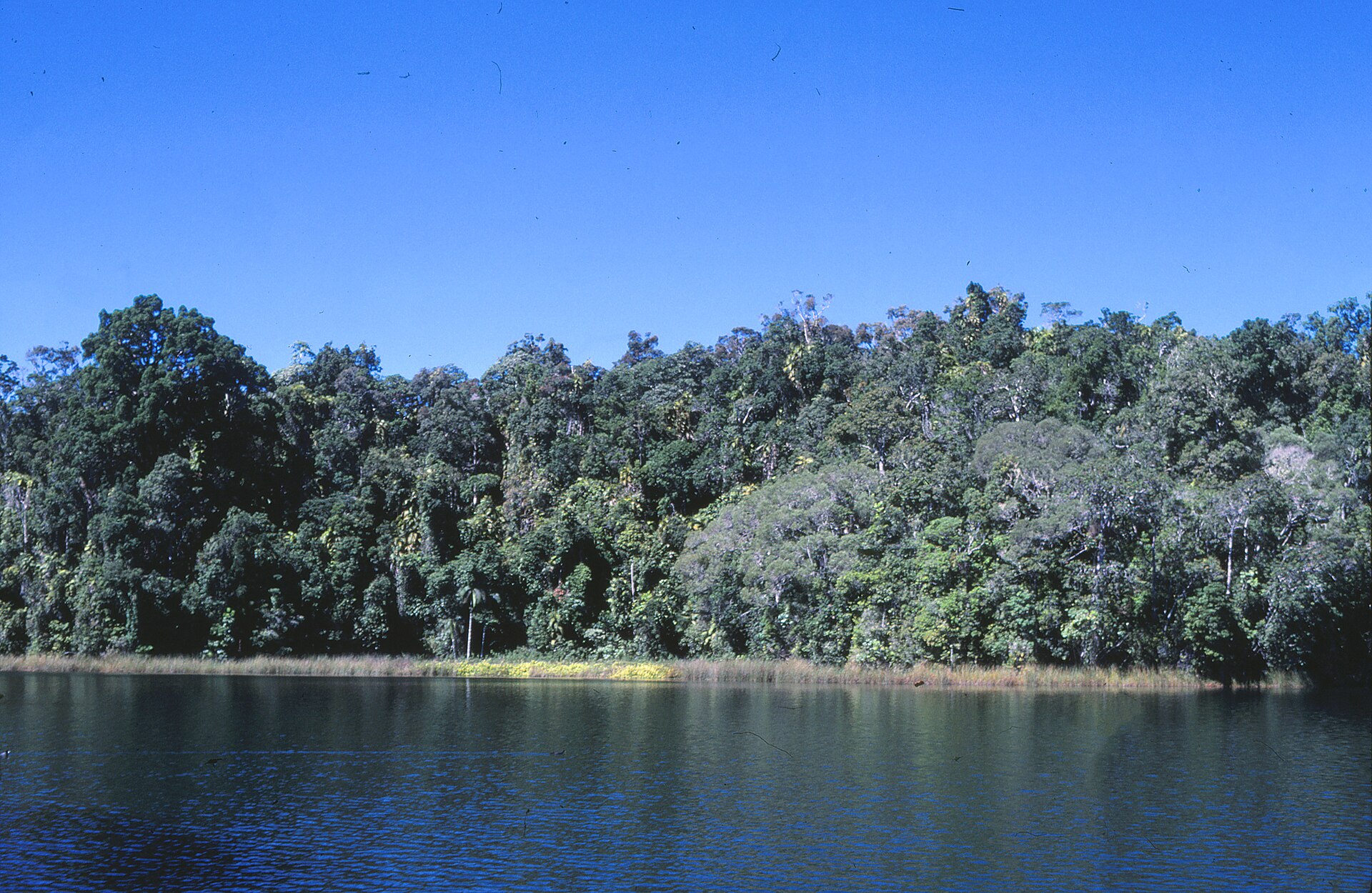
Lake Eacham - From Yungaburra, it is a short drive into Crater Lakes National Park to reach Lake Eacham, a volcanic crater lake formed more than 12,000 years ago. The water is clear and crocodile-free - this is one of the safest freshwater swims in Far North Queensland. A 3-kilometre loop track circles the lake through rainforest; over 180 bird species have been recorded here, and saw-shelled turtles are a regular sighting. Facilities include gas BBQs, picnic tables, and toilet blocks. No entry fee.
Lake Barrine is a short drive further along the same road - slightly larger, with a teahouse on the bank serving Devonshire teas. The rainforest circuit here takes about 45 minutes.
Allow the afternoon to wind down in Yungaburra. The Atherton Tablelands is platypus country, and Peterson Creek at dusk rewards patient visitors.
Day 3: The Millaa Millaa Waterfall Circuit and Malanda
This is the day most people come to the Tablelands for, and it deserves an early start.
Millaa Millaa Waterfall Circuit - The circuit runs along Theresa Creek Road, a 17-kilometre sealed loop that begins just south of the township of Millaa Millaa, roughly 105 kilometres from Cairns. Three waterfalls anchor the route:
- Millaa Millaa Falls - The 18.3-metre plunge fall is described as Australia's most photographed waterfall, and once you see it framed by dense rainforest it is easy to understand why. Swimming is permitted in the pool at its base. Facilities include picnic tables, BBQs, change rooms, and toilets. Free entry and free parking.
- Zillie Falls - A few kilometres along the loop, Zillie Falls requires a short walk down to a viewing platform above the cascade. No swimming here, but the gorge view is striking.
- Ellinjaa Falls - The third and final stop on the loop is a broad, tiered fall with a rock swimming hole at the bottom. The track is short and easy.
Plan for two to three hours on the circuit to swim and not feel rushed.
Mungalli Creek Biodynamic Dairy - Ten minutes from Millaa Millaa Falls, Mungalli Creek Dairy at 254 Brooks Road operates North Queensland's only biodynamic farmhouse cheesery. The cafe, set on a verandah overlooking the Johnston River Gorge and World Heritage rainforest, serves cheese platters, Devonshire teas, housemade ice cream, and pies. Phone (07) 4097 2232 to confirm opening days before you visit, as the cafe closes in February.
Malanda - On the way back toward Cairns (via the Gillies Highway) or as a late afternoon stop, Malanda is the centre of the Tablelands dairy industry. The Malanda Dairy Centre tells the story of the milk factory established here in 1919. Malanda Falls itself is a short walk from the town centre - a low, wide waterfall with a swimming area, picnic tables, and change rooms. Free entry.
Practical Notes
- Getting there: Cairns to the Tablelands is about 80-105 km depending on your entry point. The Kuranda Range Road (via Kuranda) and the Gillies Highway (via Gordonvale, heading toward Lake Eacham) are the two main routes - use one going up and the other coming down for variety.
- When to visit: The dry season (May to October) brings cooler temperatures and clear skies. The wet season (November to April) delivers fuller waterfalls but some roads and swimming spots may close after heavy rain.
- Accommodation: Yungaburra has the best selection of heritage guesthouses and B&Bs for a mid-range budget. Atherton (the main town) offers more motel-style options.
- Wildlife caution: Cassowaries live in this region. Drive slowly on rainforest roads, particularly at dawn and dusk.
Sources