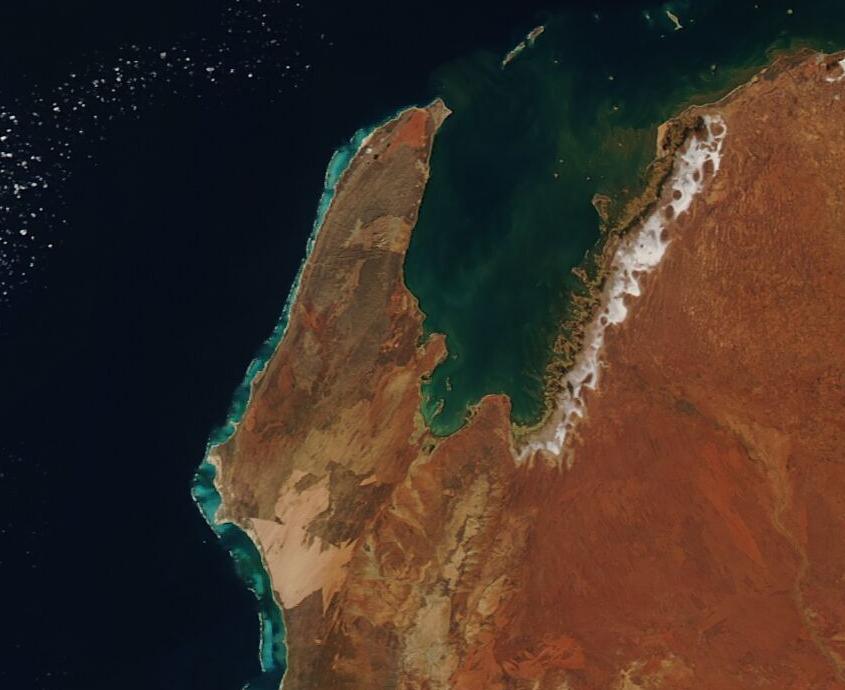
Cape Range National Park
Warnangura
Gorges, reef, and red rock
On the lands of the Baiyungu, Thalanyji and Yinigurdira peoples people.
schedule 3 min read / Updated Jun 2026
Cape Range National Park occupies 47,655 hectares of rugged limestone plateau on the North West Cape peninsula near Exmouth, fringing one of the world's most accessible coral reefs. Ancient gorges slice through the range, white beaches open directly onto Ningaloo Reef, and red kangaroos and emus roam the arid coastal plain. The park forms the land component of the Ningaloo Coast, inscribed as a UNESCO World Heritage Area in 2011.
The Cape Range is the only elevated limestone plateau on Australia's north-west coast, and its origins go back tens of millions of years to a time when this entire peninsula lay beneath a shallow sea. Gradual tectonic uplift, fluctuating sea levels, and prolonged wind and water erosion produced the deep canyons, caves, and sheer cliff faces that define the landscape today. More than 700 caves have been recorded within the park, some reaching 100 metres in depth and harbouring a unique community of subterranean fauna found nowhere else on earth. The plateau reaches a maximum elevation of 314 metres, offering panoramic views across the Indian Ocean and the turquoise ribbon of Ningaloo Reef below.
Yardie Creek is the park's most dramatic gorge, its red limestone walls dropping sheer to a permanent waterway, one of the very few permanent freshwater sources on the cape. Unlike most seasonal channels in the region, the creek retains water year-round after a sandbar traps it near the coast. A two-kilometre walking trail follows the northern ridge above the gorge, rewarding hikers with views of the multi-coloured cliff faces and the chance to spot the endangered black-flanked rock wallaby navigating the near-vertical rock faces below. Boat tours along the creek are also available.
Turquoise Bay, roughly 60 kilometres from Exmouth on the western side of the cape, is the park's most celebrated beach and one of the finest snorkelling spots in Australia. The bay's extraordinary colour comes from the shallow sand flats and the clarity of the Indian Ocean water. A natural drift current carries snorkellers along the reef edge at Turquoise Bay's southern end, bringing them past coral gardens and a wide variety of reef fish. Oyster Stacks, a few kilometres south, offers another shore-entry snorkelling site directly on the outer reef, while Lakeside provides calm, sheltered water suitable for families and less confident swimmers.
Mandu Mandu Gorge offers a contrasting inland experience. The three-kilometre return trail descends from the ridge into a dry creek bed flanked by layered limestone walls, passing through a narrow defile before opening out above the coast. Charles Knife Canyon, accessible from the Minilya-Exmouth Road on the eastern side of the range, is a sealed scenic drive that climbs steeply to canyon rim lookouts with expansive views across the peninsula. Shothole Canyon, accessed by a rough gravel track, allows visitors to examine the colourful exposed rock strata up close.
The park supports over 630 plant species, with wildflowers blooming from late July through September across the arid flats. Red kangaroos, euros, emus, and echidnas are regularly encountered. More than 100 bird species and 80 reptile species inhabit the park, and the offshore waters support whale sharks (April to July), humpback whales (May to October), manta rays, dugongs, and an extraordinary diversity of coral and marine life. Temperatures regularly exceed 45 degrees Celsius from November to March, so walks should be restricted to the April to September season. The park is jointly managed by the Nyinggulu Coast Joint Management Body, representing the Baiyungu, Thalanyji, and Yinigurdira Traditional Owners, alongside the Department of Biodiversity, Conservation and Attractions.
Common questions
Things visitors ask about Cape Range National Park.
Quick answers to help you plan.
What is the entry fee for Cape Range National Park?
expand_more
Entry costs $17 per vehicle carrying 12 or fewer occupants, with concession rates available, and per-person rates for larger vehicles. WA park passes are accepted. Fees are paid at self-registration stations at park entry points. Check with the Milyering Discovery Centre for current arrangements before travelling.
When is the best time to visit Cape Range National Park?
expand_more
April through September is strongly recommended. Summer temperatures routinely exceed 45 degrees Celsius and authorities advise against undertaking walks outside the cooler months. The April to July period coincides with whale shark season at Ningaloo, while humpback whales pass through from May to October. Wildflowers peak from late July through September across the arid flats.
Can I snorkel straight off the beach at Cape Range?
expand_more
Yes, this is one of the park's greatest drawcards. Turquoise Bay, Oyster Stacks, and several other beaches provide direct shore-entry snorkelling onto Ningaloo Reef, which begins within 100 metres of the sand in many places. No boat is required. Turquoise Bay's drift snorkel along its southern end is the most popular option, best done at higher tide for the safest conditions.
What wildlife can I expect to see in the park?
expand_more
Red kangaroos, euros, and emus are commonly seen on the arid flats, particularly in the early morning and late afternoon. Black-flanked rock wallabies inhabit the gorge cliff faces and are best spotted at Yardie Creek. The park has more than 100 bird species and 80 reptile species. Offshore, the Ningaloo Marine Park supports whale sharks, humpback whales, manta rays, dugongs, turtles, and over 500 fish species.
Is camping available inside Cape Range National Park?
expand_more
Yes, the park has multiple campgrounds including Osprey Bay, Yardie Creek, Kurrajong, Mesa, Neds, and North Mandu, bookable through the Explore Parks WA website. Sites are basic, with limited facilities, and demand is extremely high from April to September, so advance booking is essential. Check the Explore Parks WA website for current campground status before travelling.
Who are the Traditional Owners of Cape Range National Park?
expand_more
The Baiyungu, Thalanyji, and Yinigurdira peoples are the Traditional Owners of the Cape Range and Ningaloo Coast country, with archaeological evidence of long and continuous occupation. The park is jointly managed through the Nyinggulu Coast Joint Management Body, a partnership between Traditional Owners and the Department of Biodiversity, Conservation and Attractions.
How far is Cape Range National Park from Exmouth?
expand_more
The northern boundary of the park is approximately 40 kilometres from Exmouth, reached via Murat Road and then the sealed Yardie Creek Road that runs the length of the western side of the cape. Key destinations such as Turquoise Bay are about 60 kilometres from Exmouth, taking roughly 45 to 60 minutes by car. Learmonth Airport is the nearest commercial airport, located about 35 kilometres south of Exmouth.
Gallery
Cape Range National Park in pictures.
6 images licensed from Wikimedia Commons
All images are sourced from Wikimedia Commons under Creative Commons licences. Individual photographers are credited on the source pages.
Scenic views
Lookouts near Cape Range National Park.
You may also like

Ningaloo Reef

Shark Bay

Kununurra

Two Peoples Bay

Cape Le Grand National Park
Rottnest Island
Pemberton

Northam
Kalbarri
Jandakot
Greens Pool
Cable Beach
Attribution
Sources & credits
Content (4)
- Wikipedia: Cape Range National Park · CC BY-SA 4.0
- Cape Range National Park · WA Department of Biodiversity, Conservation and Attractions
- Cape Range National Park - Wikipedia · Wikipedia contributors · CC BY-SA 4.0
- Ningaloo Coast - UNESCO World Heritage Centre · UNESCO World Heritage Centre · CC BY-SA 3.0 IGO
Images (6)
- North West Cape Peninsula, Australia (MODIS 2024-06-08).jpg · MODIS Land Rapid Response Team, NASA GSFC · Public domain
- Australia exmouth yardie creek gorge.jpg · User: (WT-shared) Inas at wts wikivoyage · Public domain
- Cape Range National Park (Yardie Creek).jpg · Gfievet · CC BY-SA 4.0
- Cape Range National Park (Yardie Creek) 2.jpg · Gfievet · CC BY-SA 4.0
- Rock Wallabies, Yardie Creek, Cape Range National Park.jpg · Joshua Tagicakibau · CC BY-SA 4.0
- Rock Wallabies, Yardie Creek, Cape Range National Park 2.jpg · Joshua Tagicakibau · CC BY-SA 4.0
.jpg)

.jpg)
_2.jpg)


Images sourced from Wikimedia Commons under licenses that permit commercial use. If you are the rights holder and believe an attribution is incorrect, please contact us.