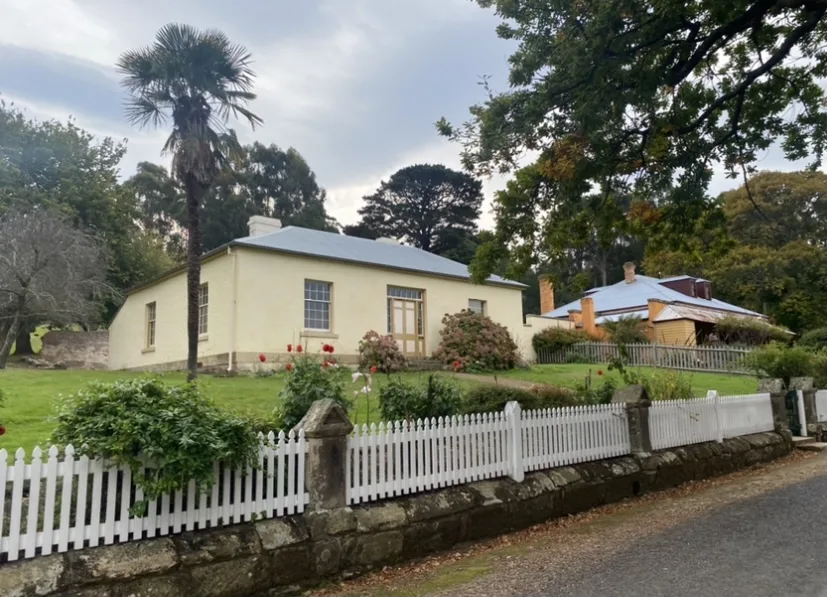
Port Arthur Historic Site
Australia's Most Preserved Convict Settlement
On the lands of the Pydairrerme people.
schedule 4 min read / Updated Apr 2026
A UNESCO World Heritage listed convict settlement on a beautiful, isolated harbour on the Tasman Peninsula, Port Arthur operated from 1830 to 1877 as the most secure penal station in the British Empire. More than 1,000 convict-era buildings, ruins and landscapes survive on the site.
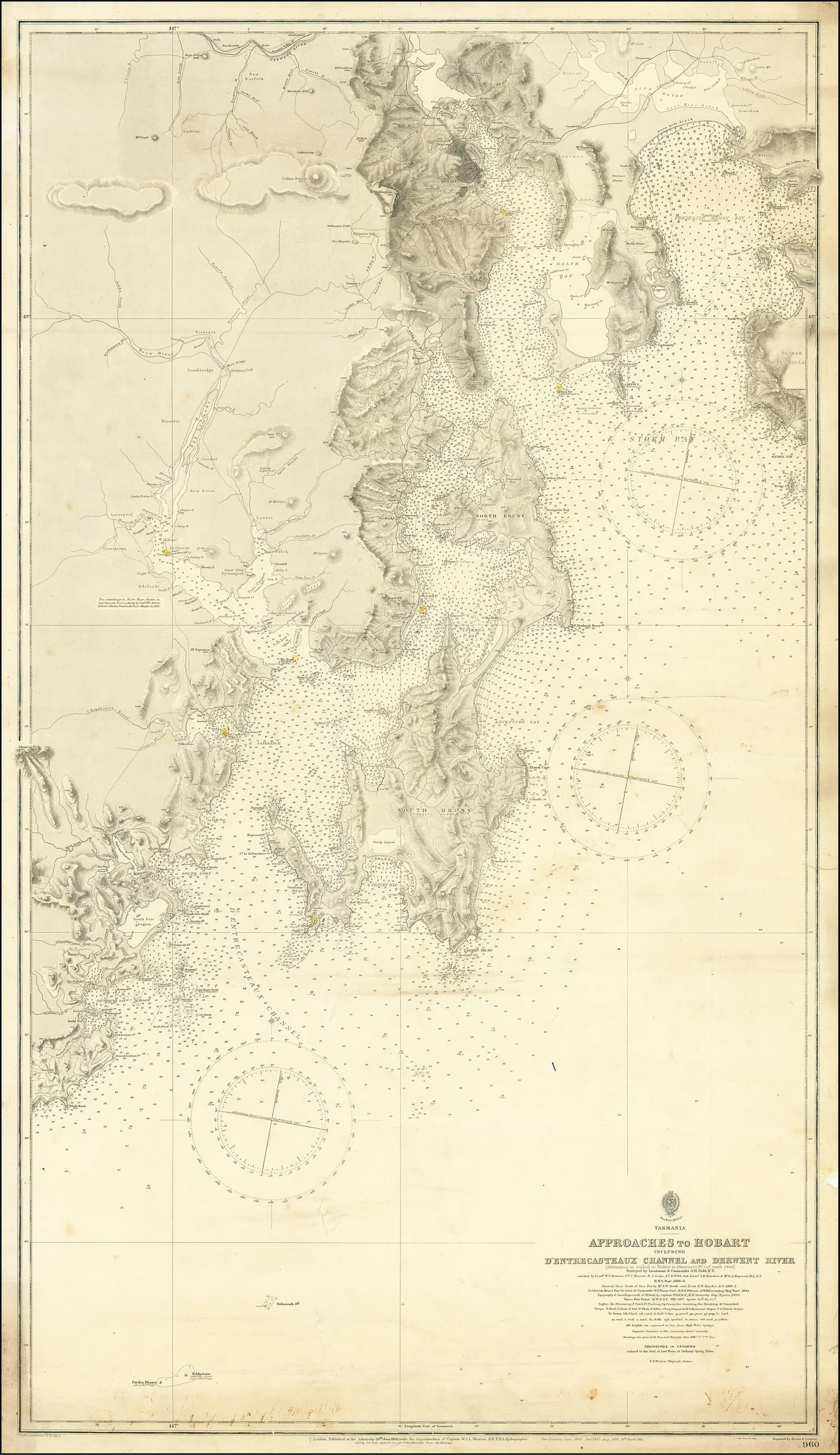
Port Arthur sits on the Tasman Peninsula about 95 kilometres south-east of Hobart, on the shore of Mason Cove at the southern end of a deep natural harbour. The site was chosen in 1830 specifically because of its geography: the peninsula is connected to mainland Tasmania by a narrow isthmus called Eaglehawk Neck, which the British then reinforced with a line of guard dogs chained across the land bridge. Escape by land was considered functionally impossible, and the cold waters of Storm Bay took care of anyone who tried to swim.
Port Arthur operated as a secondary punishment station, meaning it was where convicts who had reoffended after arriving in Australia were sent. Between 1830 and 1877 around 12,500 convicts passed through the site, and at its peak in the 1840s the settlement held close to 2,000 prisoners, guards, administrators and their families. It was at once a prison, a military outpost, a harsh industrial complex where convict labour built ships and processed timber, and a small functioning town with a church, a hospital, a children's prison on nearby Point Puer and a cemetery on the Isle of the Dead.
The site was famous in its time for its early experiments with psychological rather than physical punishment. The Separate Prison, built in 1849 and modelled on Pentonville in London, held prisoners in total isolation and silence. Guards wore felt slippers to muffle their footsteps, prisoners wore hoods when outside their cells, and chapel services were conducted in individual boxes that allowed each prisoner to see only the chaplain. The aim was to break the will of reoffenders through sensory deprivation alone, and the results were devastating for the mental health of many of the men held there.
When transportation ended in 1853, Port Arthur continued as a prison for the worst of the remaining convicts and as a facility for the elderly, the insane and the infirm. It finally closed in 1877. Bushfires in 1895 and 1897 gutted many of the timber buildings, leaving the ruins that are still the core of what visitors see today. The Australian and Tasmanian governments formally preserved the site and opened it as a historic reserve in the 1970s, and it was inscribed on the UNESCO World Heritage list in 2010 as part of the Australian Convict Sites listing.
The standard visitor experience is a self-guided tour of the grounds, a walking tour with a costumed guide, and a harbour cruise that includes the Isle of the Dead (the cemetery where more than 1,000 convicts, guards and civilians were buried in unmarked graves). A nighttime Ghost Tour runs year-round and is one of the most popular experiences, tracing the darker corners of the site by lantern light. A separate Paranormal Investigation Experience runs for those who want to go further.
For visitors who want to go deeper, the nearby Cascades Female Factory (on the outskirts of Hobart) and the Coal Mines Historic Site (an hour from Port Arthur on the Tasman Peninsula) complete a trio of UNESCO-listed Tasmanian convict sites that tell related parts of the story. All three are free to visit and, together with Port Arthur itself, give the most complete picture of the convict era anywhere in Australia.
The site also incorporates a separate memorial garden dedicated to the 35 people killed in the 1996 Port Arthur massacre, the worst mass shooting in Australian history. The attack led directly to Australia's national gun law reform in the months that followed, which has since been held up internationally as a model for gun control. The memorial is a quiet reflection garden next to the ruins of the Broad Arrow Cafe, and visitors are asked to behave with the same respect they would at any memorial site.
The site is open year-round, and the standard entry ticket is valid for two consecutive days which is enough time to see the main buildings and take the harbour cruise. Peak season is December to February; spring and autumn are often the most pleasant times to walk the grounds. Weather on the peninsula is changeable even in summer, and visitors should bring a jacket regardless of the forecast.
Where to stay
Holiday parks near Port Arthur Historic Site.
1 option via our booking partner

Bookings handled by our partner Parkbooker. We may earn a commission at no extra cost to you.
Gallery
Port Arthur Historic Site in pictures.
10 images licensed from Wikimedia Commons
All images are sourced from Wikimedia Commons under Creative Commons licences. Individual photographers are credited on the source pages.
Scenic views
Lookouts near Port Arthur Historic Site.
You may also like





Attribution
Sources & credits
Content (1)
Images (10)
- Accountant's House and Parsonage at Port Arthur Historic Sit... · Jane6592 · CC BY-SA 4.0
- Government Gardens at Port Arthur Historic Site.jpg · Jane6592 · CC BY-SA 4.0
- Eaglehawk Neck Historic Site.jpg · Debra Widdicombe · CC BY-SA 4.0
- Guard Tower at Port Arthur Historic Site.jpg · Jane6592 · CC BY-SA 4.0
- Lascar Monument to Port Arthur massacre (4551992467).jpg · Jorge Láscar from Australia · CC BY 2.0
- Lascar Monument to Port Arthur massacre (4551994633).jpg · Jorge Láscar from Australia · CC BY 2.0
- Leucopogon collinus.jpg · Murray Fagg · CC BY 3.0 au
- Port-arthur-May 2011.jpg · Tony 1212 · CC BY 4.0
- Port Arthur Asylum, Port Arthur Historic Site, Tasmania.jpg · Thennicke · CC BY-SA 4.0
- Port Arthur Historic Site.jpg · Tinghao Wang · CC BY-SA 4.0


.jpg)
.jpg)


Images sourced from Wikimedia Commons under licenses that permit commercial use. If you are the rights holder and believe an attribution is incorrect, please contact us.