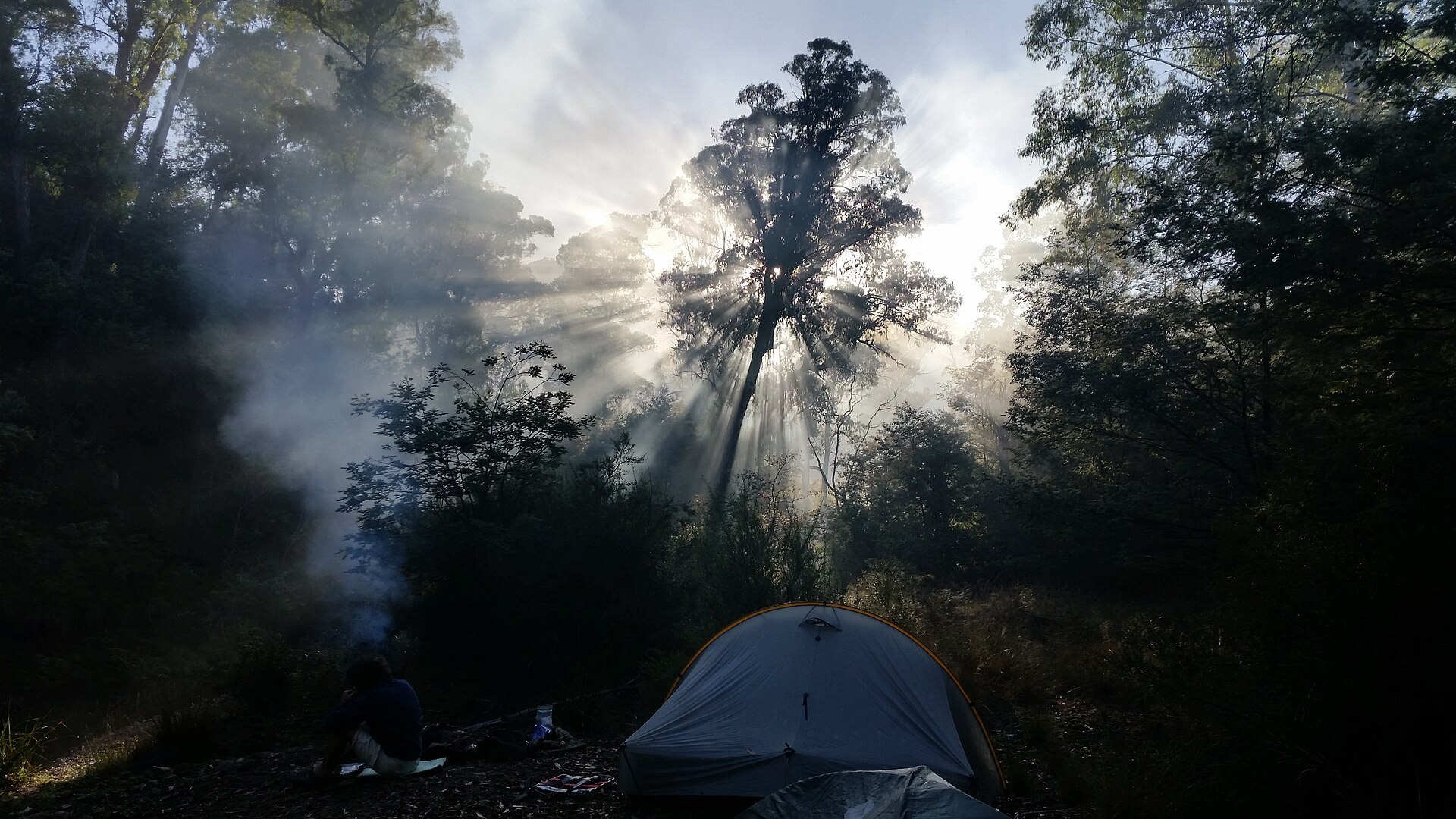
Alpine National Park
Yerto (Jaithmathang name for the high alpine country)
Victoria's rooftop wilderness - where snow gums meet sky and Australia's highest peaks beckon.
On the lands of the Gunaikurnai, Taungurung, Jaithmathang, Bidawal, Dhudhuroa, and Nindi-Ngudjam Ngarigu Monero peoples people.
schedule 3 min read / Updated Jun 2026
Sprawling across 646,000 hectares of north-east Victoria, Alpine National Park is the largest national park in the state and the centrepiece of the Australian Alps. It shelters the continent's highest peaks south of the ACT border, including Mount Bogong at 1,986 metres, and protects an extraordinary sweep of subalpine meadows, snow gum woodlands, ancient cattlemen's huts, and glacier-carved river valleys. Whether you are chasing powder snow in July or wildflowers in December, this is Australia's alpine heartland at its most magnificent.
The sheer scale of Alpine National Park defies easy description. Established in 1989 by merging several older reserves, the park encompasses much of Victoria's section of the Great Dividing Range, from the Bogong High Plains in the north to the remote Wonnangatta and Moroka wilderness in the south. The landscape shifts dramatically with altitude - river red gums give way to alpine ash forests, which thin into twisted snow gum groves before opening onto broad, windswept high plains carpeted in summer with alpine daisies, billy buttons, and trigger plants found nowhere else on Earth. More than 1,100 native plant species have been recorded here, including 12 endemic to the Australian Alps.\n\nFor walkers, the park offers a lifetime of trails. The legendary Falls to Hotham Alpine Crossing traces 37 kilometres of ridge and valley over three days, passing through some of the most dramatic scenery in the country. The 655-kilometre Australian Alps Walking Track also threads its way through the park on its journey from Walhalla to the ACT. Day walkers are equally well served, with routes leading to cascading falls such as Paradise Falls and to the summit of Mount Feathertop, whose sharp ridgeline is one of Victoria's most photographed scenes. Mountain bikers, horse riders, and four-wheel drive enthusiasts each have dedicated networks spanning hundreds of kilometres.\n\nWinter transforms the park into a different world. The ski resorts of Falls Creek and Mount Hotham sit within the park's boundaries, offering downhill runs and cross-country trails through snow gum forests. Beyond the resort fences, backcountry ski touring routes reach remote huts where self-sufficient adventurers can spend the night. Dozens of these historic mountain cattlemen's huts - some dating to the 1880s - are scattered throughout the park, each with a story tied to the droving traditions of the high country. They are now protected heritage sites managed in partnership with local communities.\n\nWildlife here is remarkable and, in some cases, found nowhere else on the planet. The mountain pygmy-possum, a tiny marsupial that hibernates beneath the snowpack, clings to survival on the Bogong High Plains. The critically endangered smoky mouse and the broad-toothed rat also shelter in the park's high-altitude heathlands. Birdlife is prolific year-round, with flame robins, gang-gang cockatoos, and wedge-tailed eagles commonly sighted. The park's rivers and streams hold wild trout populations, making fly fishing a popular pursuit, especially in the Mitta Mitta and Howqua catchments.\n\nThe park sits on country of deep cultural significance to several First Nations groups who have lived here for tens of thousands of years. Bogong moths, which gather in vast numbers in the high-country caves each summer, were a vital food source sustaining inter-tribal gatherings and ceremonies on the Bogong High Plains for millennia. Today the Gunaikurnai and Taungurung peoples are engaged in joint management of the park with Parks Victoria, and the Jaithmathang, Bidawal, Dhudhuroa, and Nindi-Ngudjam Ngarigu Monero also identify this landscape as part of their traditional country. Visiting with an awareness of this living cultural heritage adds a profound dimension to any journey into the high country.
Scenic views
Lookouts near Alpine National Park.
You may also like



Attribution
Sources & credits
Content (1)
Images (3)
- Camping on the Catherine River, Alpine National Park.jpg · Leighblackall · CC BY-SA 4.0
- Dandongadale Falls, Alpine National Park, Victoria.jpg · Integrator2 · CC BY-SA 4.0
- European Rabbit in Alpine National Park.jpg · Amara Bharathy · CC BY-SA 4.0


Images sourced from Wikimedia Commons under licenses that permit commercial use. If you are the rights holder and believe an attribution is incorrect, please contact us.