Coonawarra Wine Region
Kunuwara
A narrow ribbon of red earth that produces some of the most celebrated Cabernet Sauvignon on the planet.
On the lands of the Bungandidj (Boandik) people people.
schedule 3 min read / Updated Jun 2026
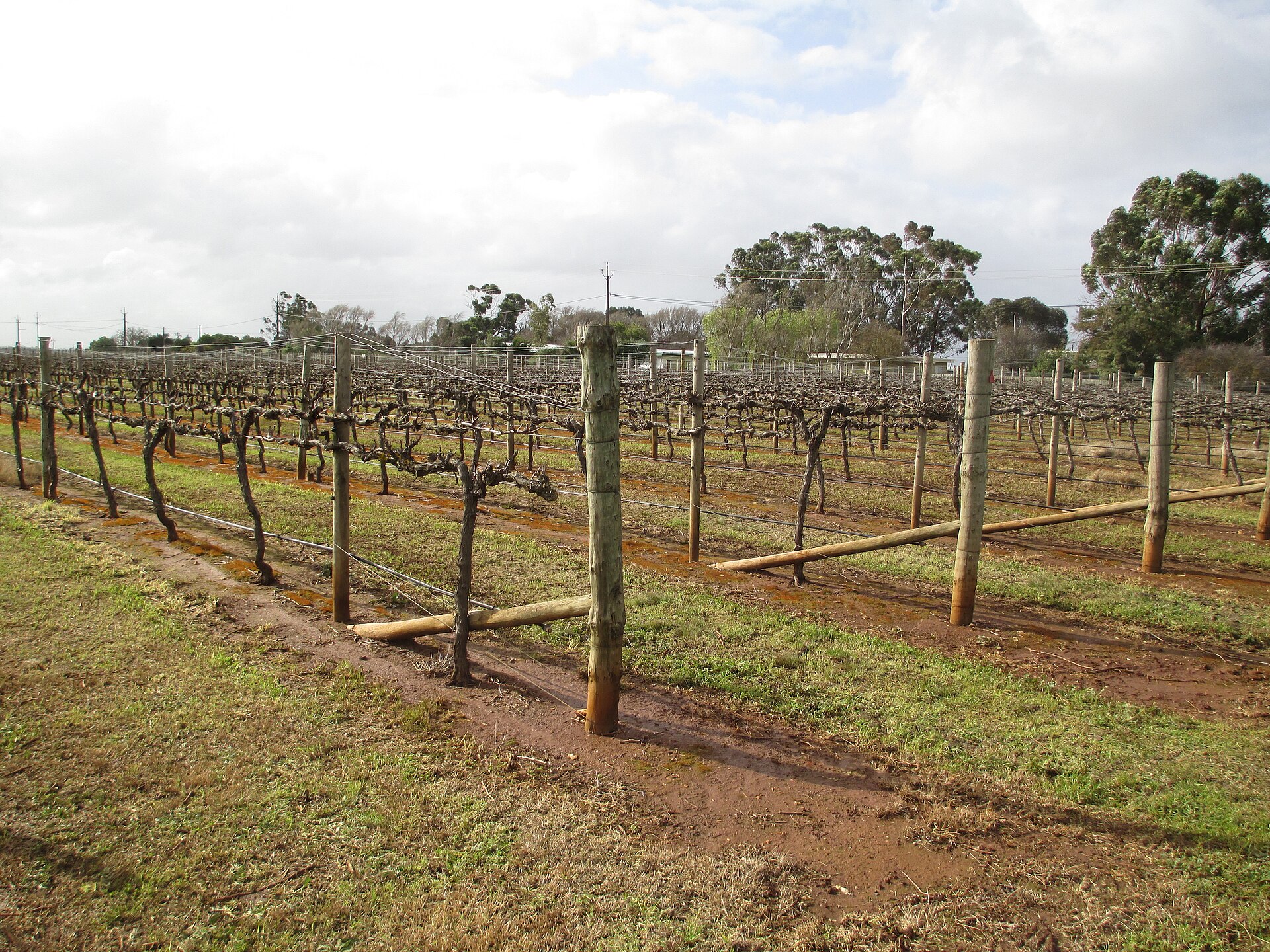
Coonawarra is a slender, 15-kilometre strip of terra rossa soil in South Australia's Limestone Coast, roughly 380 kilometres south-east of Adelaide near the Victorian border. Thin iron-rich red loam sits over a shallow limestone ridge, creating one of Australia's most prized wine terroirs and giving Coonawarra Cabernet Sauvignon its signature blend of dark berry fruit, cool-climate freshness and uncanny ageing potential. The name derives from the Bungandidj word "kunuwara," meaning swan, a fitting tribute to the country's Aboriginal custodians who lived across this southern corner of the continent for thousands of years before European settlement.
The story of Coonawarra as a wine region begins in 1890, when Scottish immigrant and pastoralist John Riddoch planted the first commercial vines across 81 hectares of his Penola Fruit Colony, and the inaugural vintage - a Claret - was produced in 1895 in a modest nursery shed. After Riddoch's death in 1901, the region struggled for half a century, kept alive by the dedicated work of winemaker Bill Redman. The transformation came in 1951 when David Wynn purchased the original Riddoch cellars with a stated ambition to make Coonawarra famous - a vow that has been thoroughly fulfilled. Formal Geographical Indication boundaries were established in 2003, codifying exactly which parcels of that precious red earth could carry the Coonawarra name.\n\nThe terra rossa soil is the region's defining characteristic and one of the most scrutinised patches of earth in Australian viticulture. Stretching no wider than two kilometres at its broadest point, this iron-oxide topsoil drains freely through the porous limestone beneath, stressing vines just enough to concentrate flavour while maintaining vigour. Three soil types cross the region - terra rossa, black rendzina, and a transitional brown rendzina - but it is the red earth that growers and collectors prize above all. Cabernet Sauvignon dominates, accounting for around 64 per cent of the 5,784 hectares under vine, followed by Shiraz and smaller plantings of Chardonnay and Merlot.\n\nCoonawarra's climate owes much to its proximity to the Southern Ocean, approximately 60 kilometres distant. Cold maritime air moderates summer temperatures, with mean January readings around 19-20 degrees Celsius - conditions broadly comparable to Bordeaux. Annual rainfall of around 585 millimetres falls predominantly outside the growing season, and consistent cloud cover helps preserve fruit acidity. The result is wines of medium to full body with lifted aromatics, blackcurrant and dark cherry character, and a freshness that allows premium examples to develop gracefully over two or more decades in bottle. Shiraz plays a strong supporting role, producing a distinctly lighter, more restrained style than warmer Australian regions.\n\nVisiting Coonawarra is rewarding in any season, but the autumn harvest window from February through April is the most compelling time - vines are heavy with fruit, cellar doors buzz with activity, and the Coonawarra After Dark vintage celebration in April draws wine lovers from around the country. The Coonawarra Vignerons Association coordinates more than 25 cellar doors spread along the Riddoch Highway, most within easy walking or cycling distance of one another. A dedicated five-kilometre walking trail threads through six wineries, making it possible to taste across the region on foot. The historic township of Penola, just 10 kilometres south, adds heritage streetscapes and literary connection as the childhood home of Saint Mary of the Cross MacKillop to any itinerary. Naracoorte Caves National Park, a World Heritage Site, lies only 25 kilometres north, and the coastal towns of Robe and Beachport are an hour's drive west.
Scenic views
Lookouts near Coonawarra Wine Region.
You may also like

Mount Gambier
Limestone Coast

Naracoorte Caves

Adelaide

Woodside
Glenelg

Tanunda
Murray River (Riverland)

Yorke Peninsula
Vivonne Bay

Kangaroo Island

Coober Pedy
Attribution
Sources & credits
Content (1)
Images (1)
- Vines near Coonawarra.JPG · ScottDavis · CC BY-SA 4.0

Images sourced from Wikimedia Commons under licenses that permit commercial use. If you are the rights holder and believe an attribution is incorrect, please contact us.