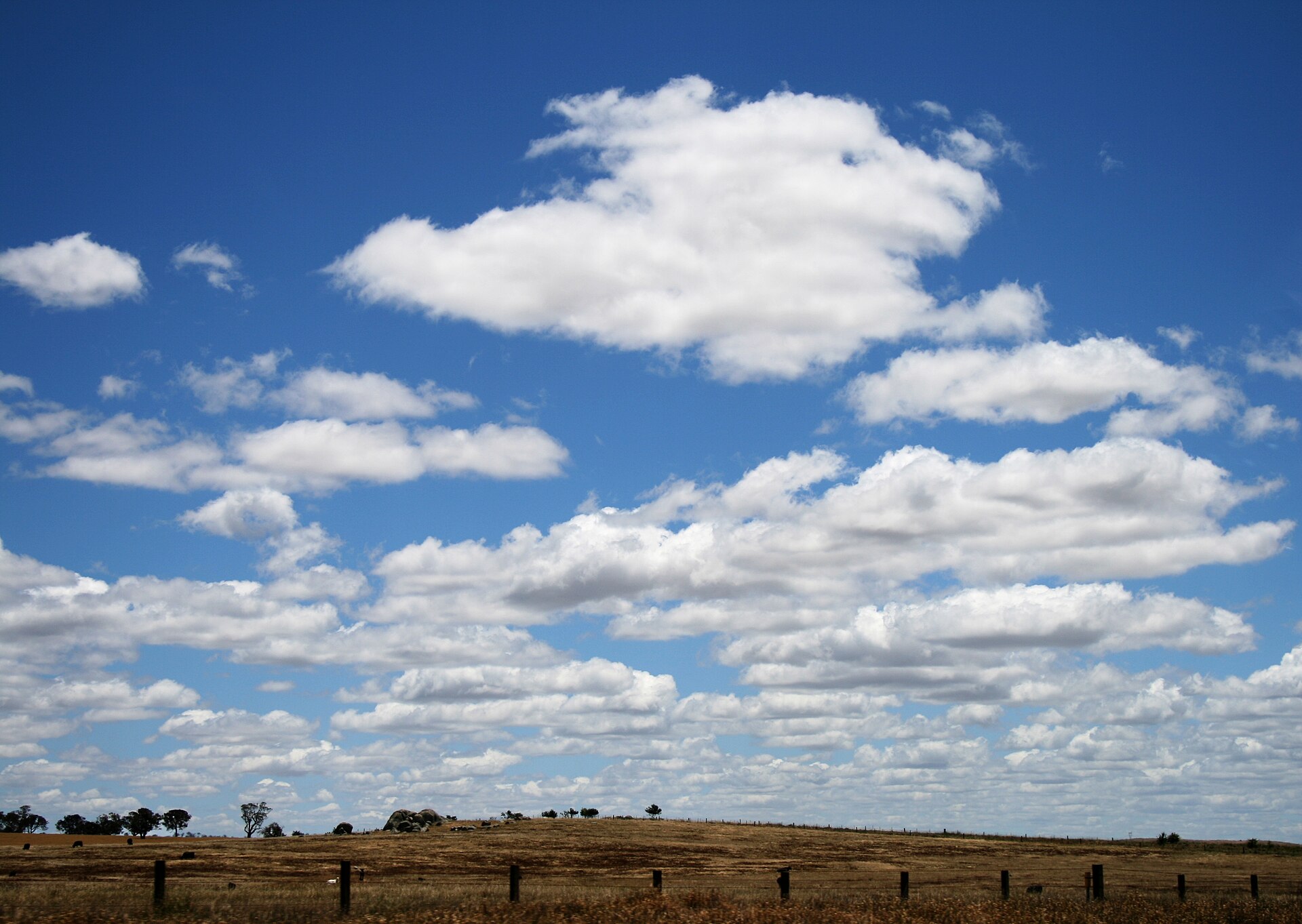
Goulburn
Mulwaree
Australia's first inland city - where gold-rush grandeur meets fine wool country on the Southern Tablelands
On the lands of the Gundungurra and Ngunnawal peoples people.
schedule 3 min read / Updated Jun 2026
Declared Australia's first inland city by royal letters patent from Queen Victoria in 1863, Goulburn stands at the gateway to the Southern Tablelands roughly two hours south-west of Sydney and one hour north-east of Canberra. Ringed by rolling pastoral country long celebrated as the fine wool capital of the world, the city wears its Victorian-era wealth openly - in sandstone cathedrals, a stately courthouse, and wide heritage streetscapes that have changed little since the 1880s, when Goulburn was the second-largest city in New South Wales.
Goulburn's foundation story begins with the Gundungurra and Ngunnawal peoples, who called this country Mulwaree - meaning "long water" - and whose connection to the land reaches back at least 21,000 years. European surveyors arrived in 1828, and the city was relocated to its present riverside site in 1833 before growing rapidly on the strength of merino wool and the arrival of the railway from Sydney in 1869. That railway heritage is still alive at the Goulburn Rail Heritage Centre, where preserved steam and diesel locomotives fill a converted roundhouse, while the grand Gothic bulk of St Saviour's Cathedral - designed by Edmund Thomas Blacket and completed in 1884 - anchors the historic precinct at the heart of the city.\n\nNo visit to Goulburn is complete without a stop at the Big Merino, a three-storey, 15.2-metre concrete ram named Rambo that has stood as an emblem of the region's wool industry since 1985. Inside, a permanent exhibition traces 200 years of Australian wool production, making it as much a working museum as an iconic roadside landmark. From there, a self-guided heritage walk winds past the 1887 Post Office, the Georgian-influenced Court House, and several grand homesteads, each telling a chapter of the city's prosperous pastoral past.\n\nFor those drawn to panoramic views and living history, Rocky Hill War Memorial rises 20 metres above ground level and delivers a sweeping outlook over the city and the surrounding tablelands. The museum at its base spans Australia's military involvement from the 19th century to the present day and admission is free, relying on donations. Down at the river flats, the Goulburn Historic Waterworks sits on the banks of the Wollondilly River, its Victorian-era pump house and steam engine still in working order - an unexpected industrial gem tucked beside shady picnic grounds.\n\nBeyond the city limits, the Southern Tablelands open up into some genuinely wild country. Bungonia National Park, just 30 kilometres to the east, contains the deepest limestone gorge in the Southern Hemisphere along with more than 200 caves - a playground for experienced cavers, abseilers and rock climbers seeking the only limestone climbing in inland New South Wales. Closer to home, the Wollondilly Walking Track traces the riverbank through wetlands that attract waterbirds year-round, and the broader Goulburn Mulwaree region is dotted with cool-climate wineries including Lerida Estate and Collector Wines, adding a gentle foodie dimension to any weekend itinerary.\n\nGoulburn is a genuinely welcoming regional city with solid visitor infrastructure: a well-stocked Visitor Information Centre opposite Belmore Park offers free Wi-Fi, EV charging, and disabled facilities, while the Adventure Playground in Victoria Park includes inclusive play structures designed for all abilities. The compact city centre is easy to explore on foot, with the main heritage sites clustering within a short walk of each other, and the Aquatic and Leisure Centre adds family-friendly appeal in the warmer months.
Tourist locations
Places to visit in Goulburn.
6 locations to explore
Bungonia National Park
Gorges, caves and tablelands adventure
$8 per vehicle per day
Full guide arrow_forwardGoulburn Historic Waterworks Museum
The Southern Hemisphere's last intact steam pumphouse
Donation
Full guide arrow_forwardLerida Estate
Cool-climate cellar door on Lake George
Free entry; wine tastings priced separately
Full guide arrow_forwardRocky Hill War Memorial and Museum
Panoramic views and wartime honour
Free
Full guide arrow_forwardThe Big Merino
Icon of Australia's wool story
Free
Full guide arrow_forwardWombeyan Karst Conservation Reserve
Ancient limestone caves in hidden tablelands
From $20 adult (Fig Tree Cave self-guided); $24 adult (Wollondilly Cave guided)
Full guide arrow_forwardScenic views
Lookouts near Goulburn.
You may also like

Canberra

Kangaroo Valley

Lake Burley Griffin

Parliament House
Wahroonga

Newtown

Jenolan Caves
Eden
Narooma
Merimbula
The Rocks

Jindabyne
Attribution
Sources & credits
Content (1)
Images (3)
- Cumulus humilis clouds.jpg · Toby Hudson · CC BY-SA 3.0
- Goulburn Hospital, New South Wales.jpg · American and Australasian Photographic Company · Public domain
- Photograph of the skeleton and chains used to gibbet a man c... · Unknown authorUnknown author · Public domain


Images sourced from Wikimedia Commons under licenses that permit commercial use. If you are the rights holder and believe an attribution is incorrect, please contact us.