Great Otway National Park
Gadubanud country
Ancient rainforest, thundering waterfalls and wild coastline along Victoria's most iconic road
On the lands of the Gadubanud (Katabanut) people, with connections also held by the Wadawurrung, Gulidjan and Kirrae Whurrong peoples people.
schedule 3 min read / Updated Jun 2026
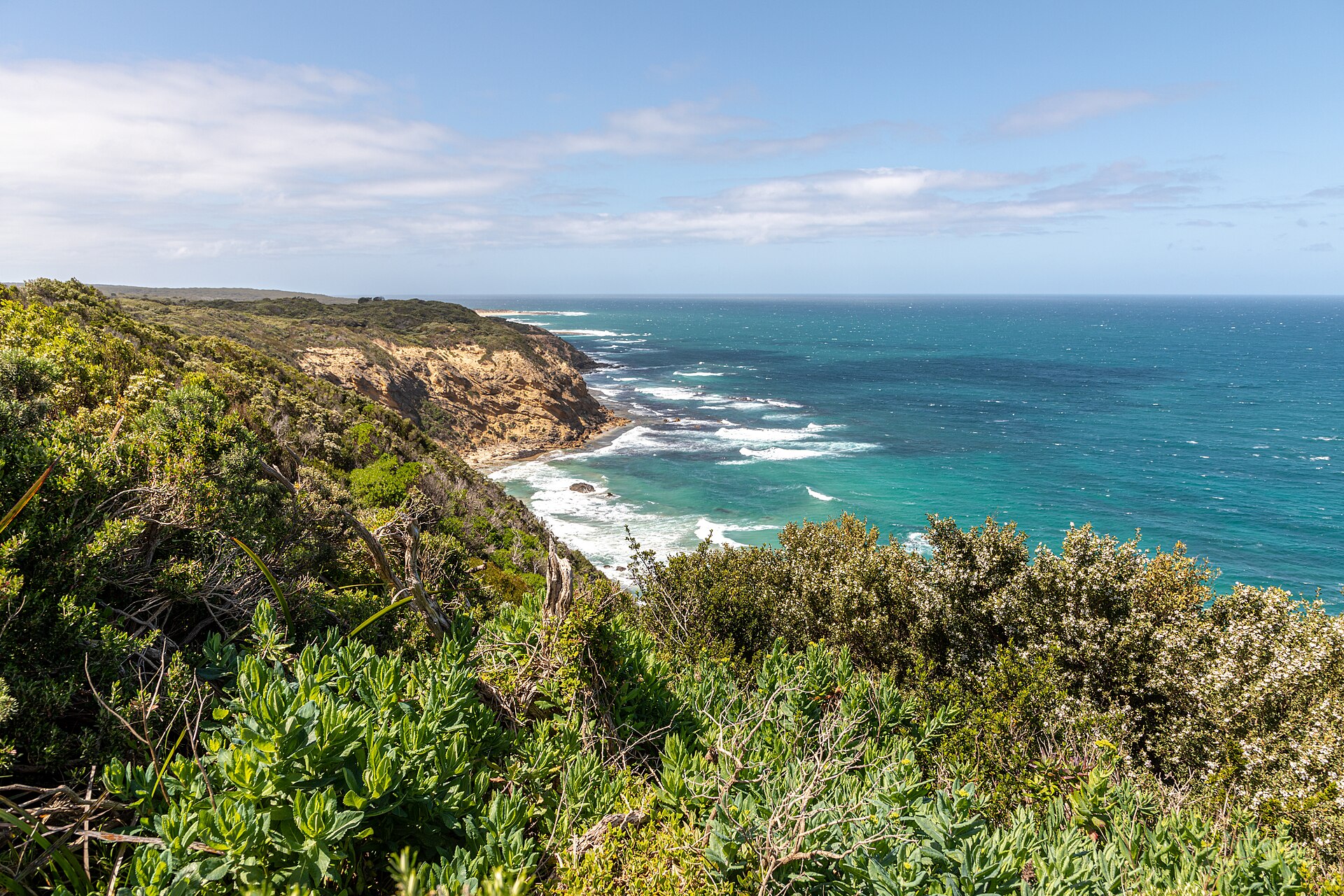
Stretching across more than 103,000 hectares of the Barwon South West coast of Victoria, Great Otway National Park is one of Australia's most diverse and dramatic protected areas, combining cool-temperate rainforest, thundering waterfalls, rugged surf beaches and windswept headlands. Gazetted in December 2005, the park absorbs the full force of Southern Ocean weather systems that roll in off Bass Strait, making it the wettest corner of mainland Australia and keeping its ancient forest perpetually lush. It is the living heart of Gadubanud country, a landscape the King Parrot people have known and cared for across hundreds of generations.
The park's interior is dominated by cool-temperate rainforest crowded with centuries-old myrtle beech, mountain ash and tree ferns whose canopy closes overhead like a cathedral. The short Mait's Rest Rainforest Walk (800 m, wheelchair accessible) puts visitors inside this world within minutes of leaving the car park, while the Melba Gully circuit (1.6 km) leads to a patch of ancient myrtle beech so dense it earns the nickname "the Jewel of the Otways". After dark, glow worms light the creek banks at Melba Gully with blue-green sparks, one of the most quietly magical experiences in Victorian nature.
Waterfalls are the park's calling card. Triplet Falls drops in three tiered cascades through a ferny gorge (1.8 km return), Hopetoun Falls spills over a basalt lip ringed by tree ferns, and Erskine Falls near Lorne plunges 30 metres into a rainforest amphitheatre. Winter and spring bring the heaviest flows - the Otways record more than 219 rain days a year, the highest count of any place on the Australian mainland - so the falls are at their most spectacular from May through September. Lake Elizabeth, formed by a landslide in 1952 that dammed the West Barwon River, is the best spot in Victoria to quietly observe a platypus at dusk from a guided canoe.
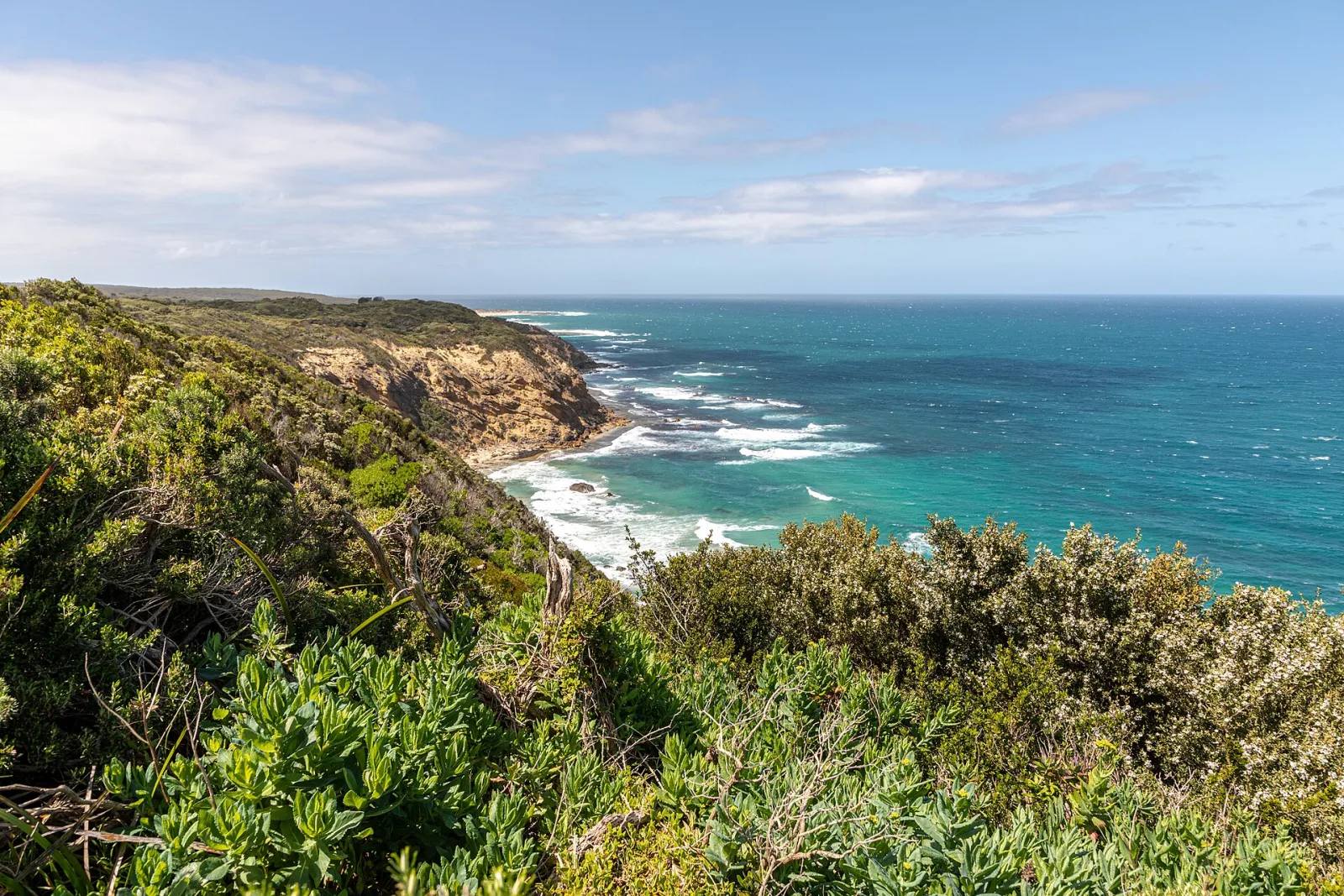
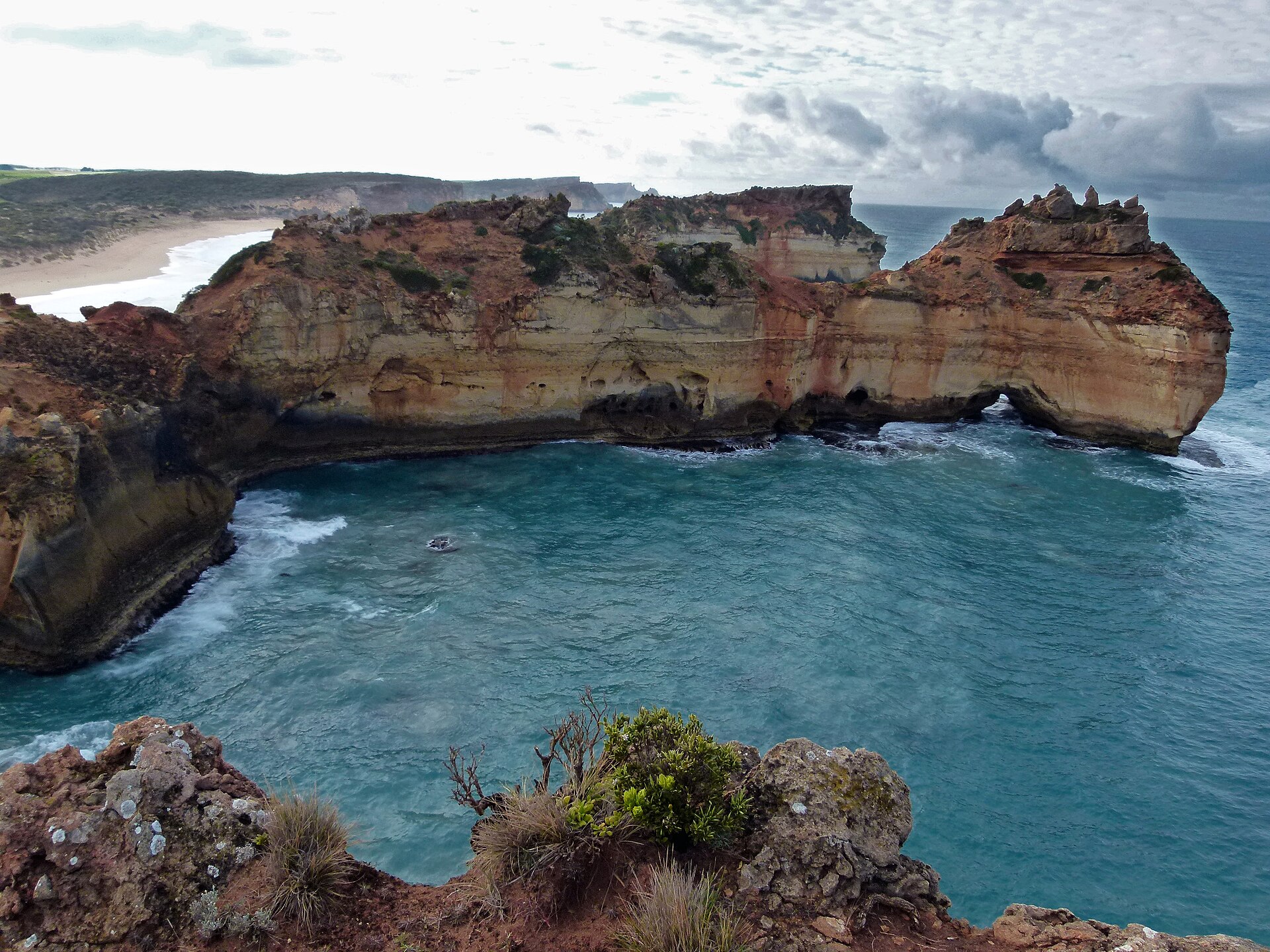
The park stretches all the way to the Southern Ocean, and the change in character from forest to coast is abrupt and thrilling. Cape Otway - the southernmost tip of mainland Victoria - supports one of the densest populations of wild koalas in the country, often visible draped in the forks of manna gums along Lighthouse Road. The Cape Otway Lightstation, adjacent to the park boundary, is the oldest surviving lighthouse on mainland Australia (1848). From the cape and from Johanna Beach to the west, southern right whales and humpback whales pass close inshore during their annual migrations between May and October.
The Great Ocean Walk, Victoria's premier long-distance coastal trail, begins in Apollo Bay and threads through the park for the bulk of its 110 km route before finishing at the Twelve Apostles - an eight-day adventure for serious walkers, though any single section can be walked as a day trip. Mountain bikers are well catered for around Forrest, where 16 single-track trails wind through the eucalypt ranges. The Californian Redwood plantation near Beech Forest - a striking stand of towering sequoias planted in the 1930s - adds an unexpected detour for those exploring the hinterland.
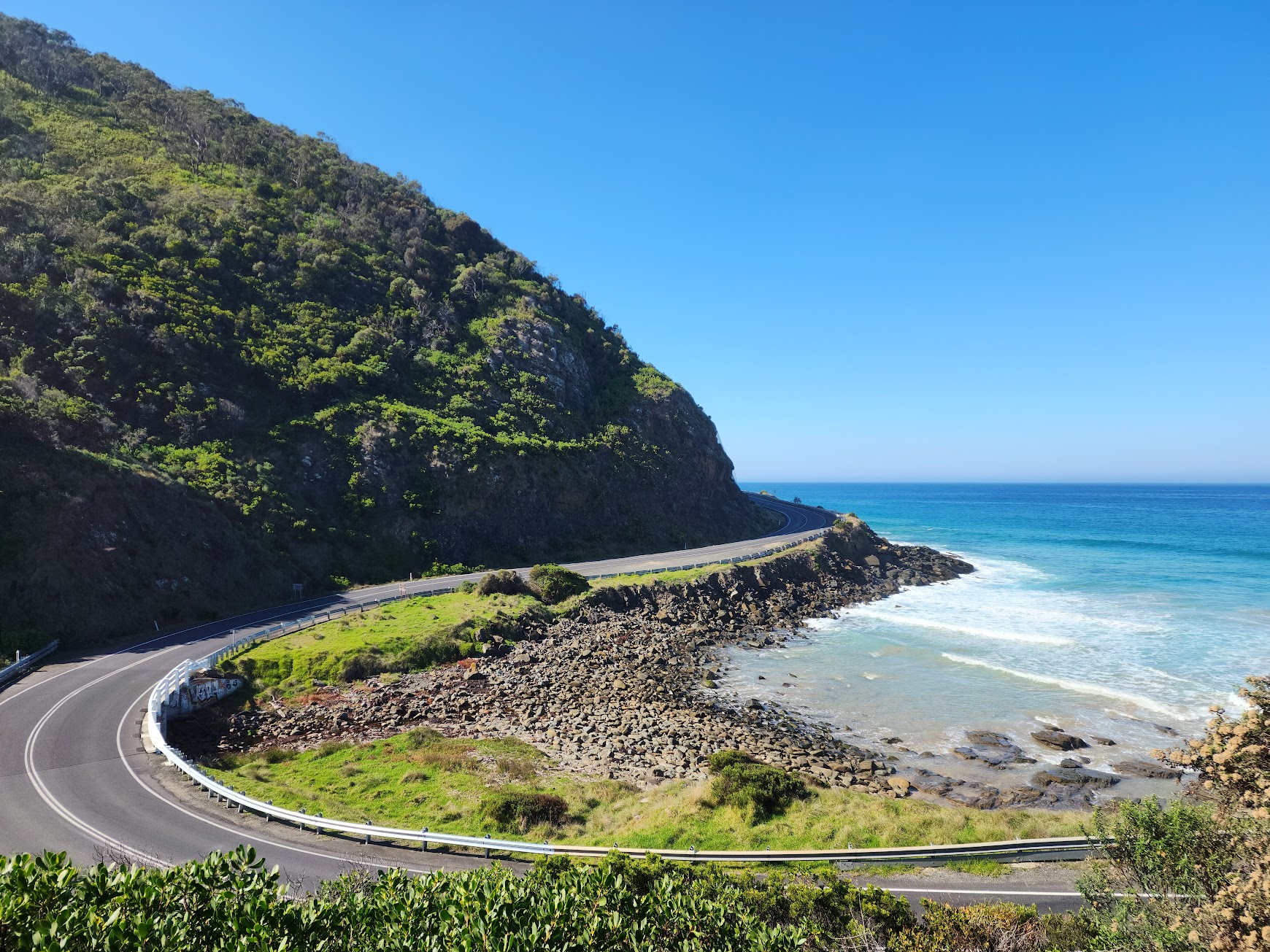
Access is straightforward from Melbourne: the Great Ocean Road winds south-west from Torquay and delivers visitors to the park's eastern edge at Lorne (140 km from Melbourne) and to the hub town of Apollo Bay (approximately 190 km). Camping is available at Blanket Bay, Aire River and other sites through the Parks Victoria booking system. The park is free to enter, though the Cape Otway Lightstation and private Otway Fly Treetop Walk both charge admission. Parts of the park were affected by flooding in early 2026 - check Parks Victoria for current track closures before visiting.
Where to stay
Holiday parks near Great Otway National Park.
1 option via our booking partner

Bookings handled by our partner Parkbooker. We may earn a commission at no extra cost to you.
Scenic views
Lookouts near Great Otway National Park.
You may also like



Attribution
Sources & credits
Content (1)
Images (3)
- Cape Otway (AU), Cape Otway Lighthouse, Coastline -- 2019 --... · Dietmar Rabich · CC BY-SA 4.0
- Cape Otway (AU), Cape Otway Lighthouse, Coastline -- 2019 --... · Dietmar Rabich · CC BY-SA 4.0
- Cape Otway (AU), Cape Otway Lighthouse, Coastline -- 2019 --... · Dietmar Rabich · CC BY-SA 4.0
,_Cape_Otway_Lighthouse,_Coastline_--_2019_--_1180.jpg)
,_Cape_Otway_Lighthouse,_Coastline_--_2019_--_1206.jpg)
,_Cape_Otway_Lighthouse,_Coastline_--_2019_--_1209.jpg)
Images sourced from Wikimedia Commons under licenses that permit commercial use. If you are the rights holder and believe an attribution is incorrect, please contact us.