
Twelve Apostles
Sentinels of the Southern Ocean
On the lands of the Eastern Maar people.
schedule 3 min read / Updated Apr 2026
A row of limestone sea stacks rising from the Southern Ocean off the Great Ocean Road, the Twelve Apostles is one of the most photographed coastlines in Australia. Despite the name, only eight stacks remain standing after centuries of erosion, and the number continues to drop.
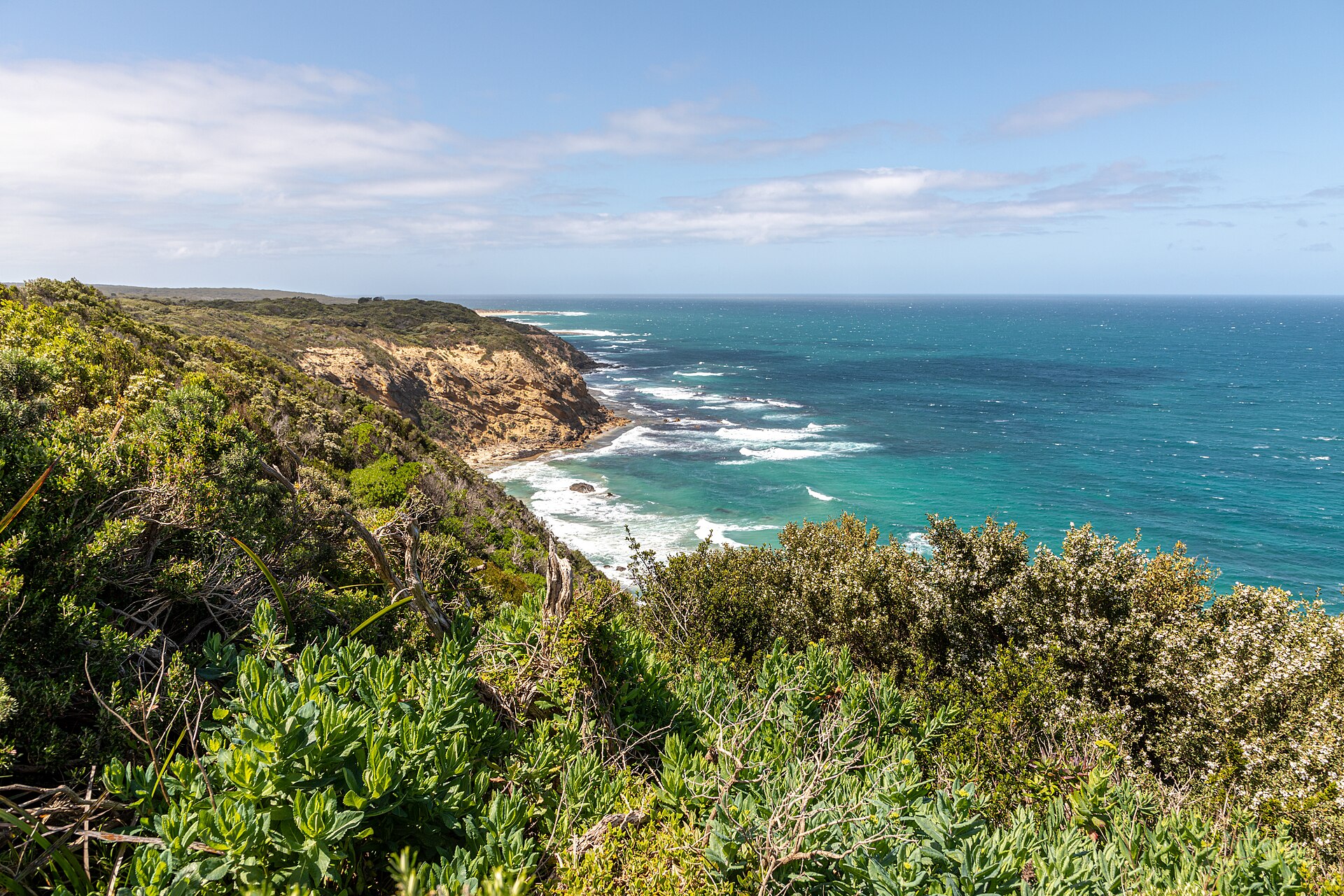
The Twelve Apostles are a cluster of limestone sea stacks standing in the Southern Ocean off the coast of Port Campbell National Park in Victoria, about four hours' drive west of Melbourne along the Great Ocean Road. They rise up to 45 metres above the waterline and are all that remains of a sandstone-limestone coastline that has been cut back by 2 centimetres a year by wind and waves for the past 10 to 20 million years.
The name Twelve Apostles was adopted in the 1950s for marketing purposes. Before that, the formation was known as the Sow and Piglets, with the largest stack being Sow (now Muttonbird Island) and the smaller stacks the Piglets. There have never been exactly twelve stacks in recorded history, and the count has declined as older stacks collapse. One of the most famous stacks fell in July 2005 when it crumbled suddenly in front of tourists; another followed in September 2009. Today there are eight recognisable stacks visible from the main lookout.
The visitor precinct is built around a dedicated visitor centre on the inland side of the Great Ocean Road, connected to the cliff-edge lookouts via a pedestrian underpass. The main lookout platform offers the classic postcard view of the stacks stretching to the south-west, and an additional platform extends towards the Gibson Steps, where a staircase cut into the cliff gives access to the beach below. Walking onto the beach is one of the few ways in the world to stand at the base of a stack of this size and look straight up.
The stacks are best visited at sunrise or sunset, when the low-angle light turns the limestone cliffs a deep gold and the sky behind them fills with colour. Sunrise is usually quieter than sunset because most coach tours leave Melbourne after breakfast and arrive at midday. Hardcore photographers favour the hour before sunrise when the shoreline is almost empty and the surf is at its most dramatic.
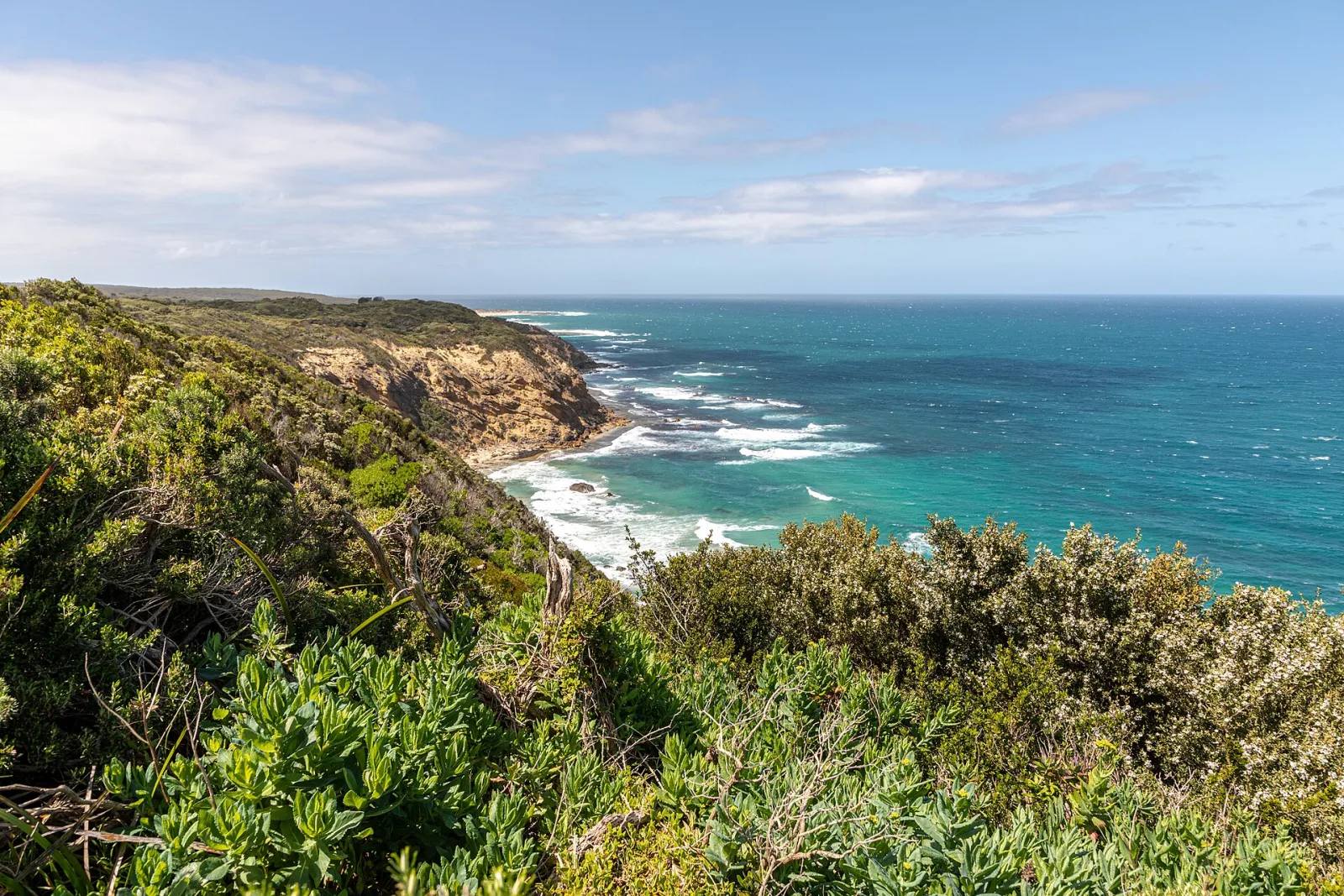
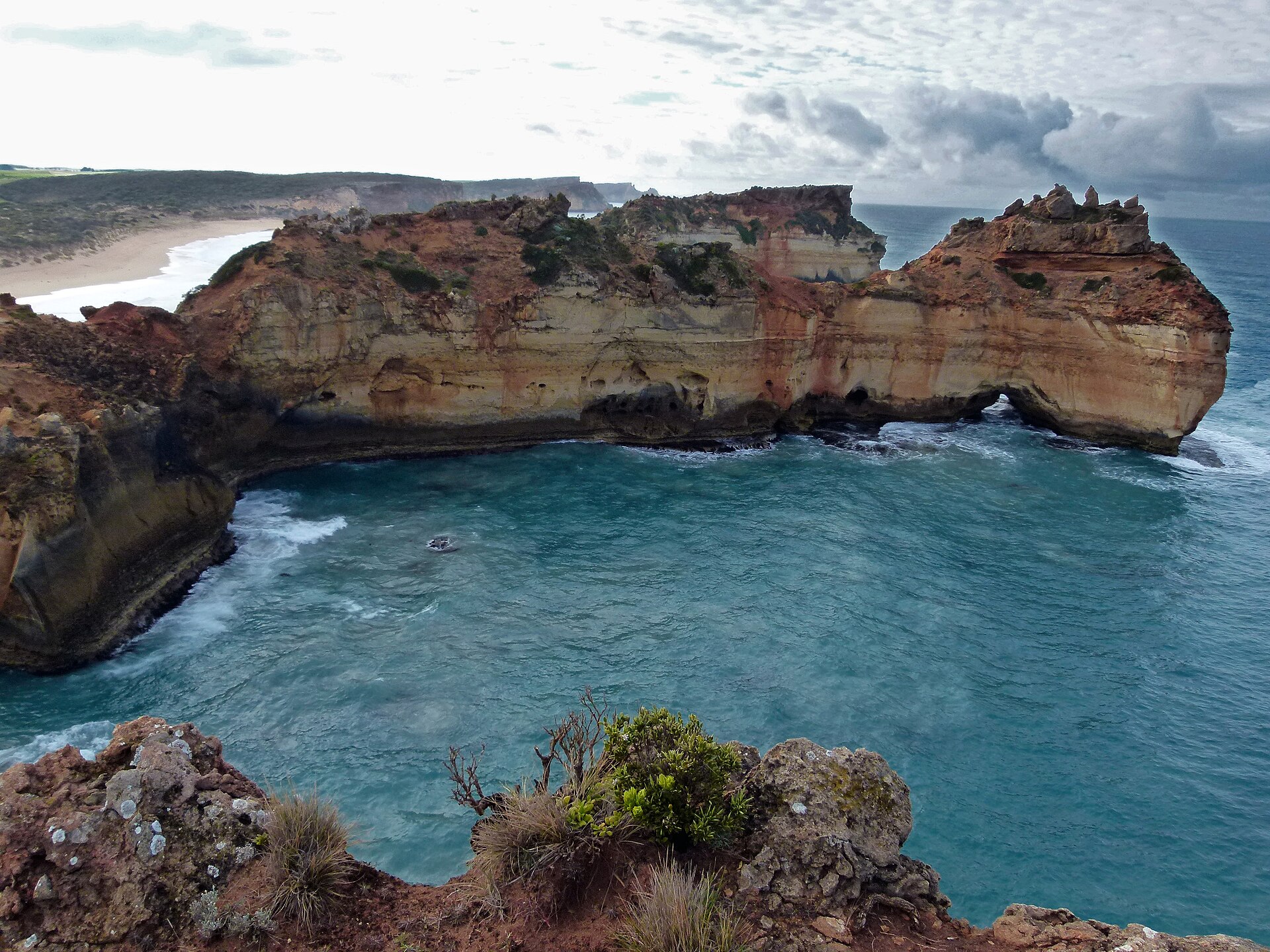
Beyond the Apostles themselves, the surrounding stretch of coast is one of the most geologically rich in the country. Loch Ard Gorge, five minutes east, is named after the clipper Loch Ard that wrecked here in 1878, and has its own beach and a famous arch (now collapsed, but the passage remains). London Bridge, ten minutes further east, was an arched land bridge until it collapsed in 1990 with two tourists stranded on the outer section. The Bay of Martyrs and The Grotto continue the formations west of the Apostles.
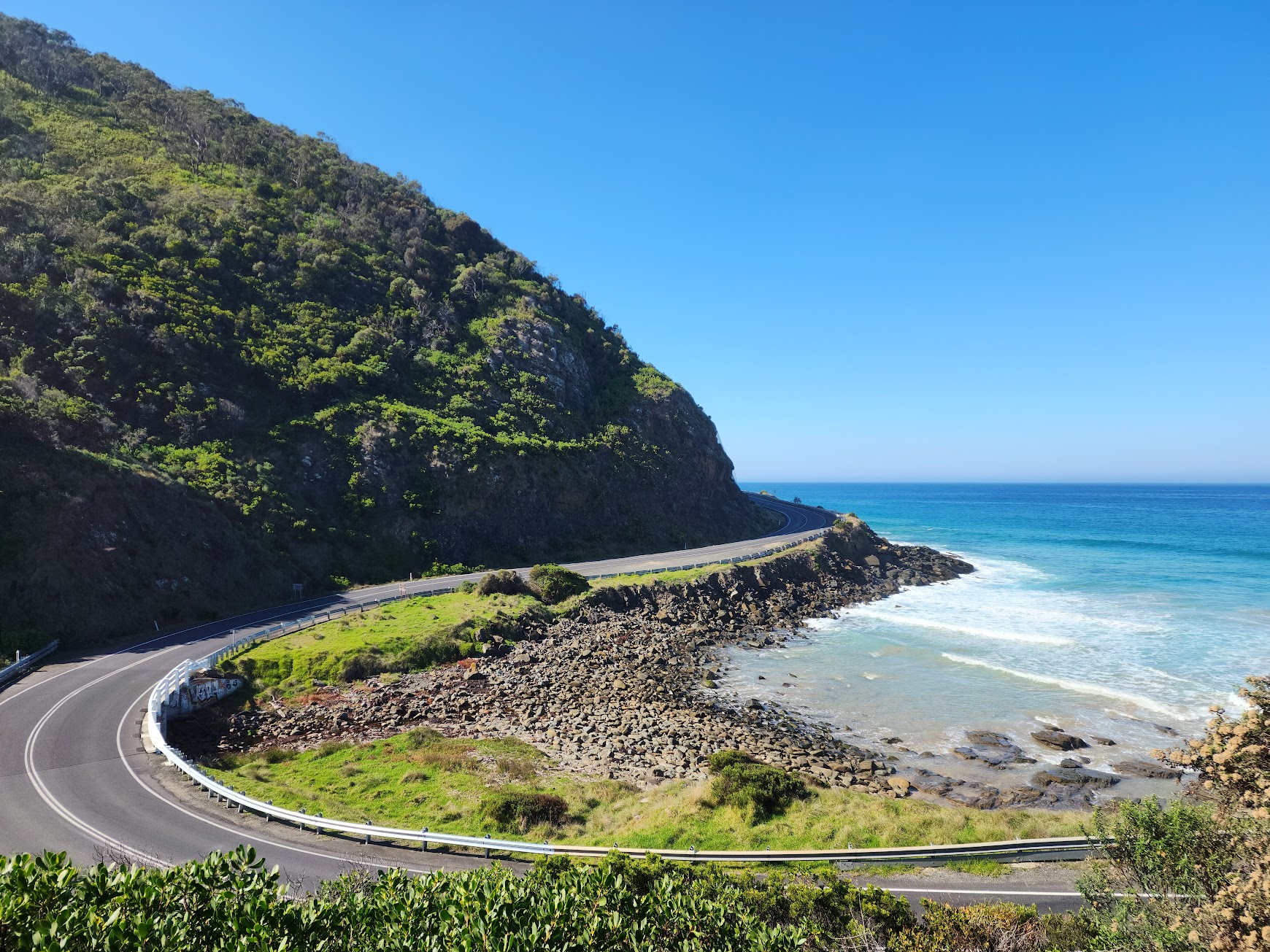
The Great Ocean Road itself is a national heritage listed road that runs 243 kilometres between Torquay and Allansford. It was built by returned soldiers between 1919 and 1932 and is the world's largest war memorial, dedicated to Australians killed in the First World War. Driving the full length takes at least two full days with stops; most visitors on a short trip do Melbourne to the Twelve Apostles and back over a long day or an overnight stay in Port Campbell.
The weather here is wildly variable. The Southern Ocean is unfiltered all the way from Antarctica, and a sunny morning can turn into driving rain within an hour. The best months statistically are March, April, October and November, when the air is still mild but the summer crowds have gone. December to February are peak season but also the most crowded. Winter (June to August) is stormy but dramatic, and often the best time for photographers willing to gamble on conditions.
Common questions
Things visitors ask about Twelve Apostles.
Quick answers to help you plan.
Where exactly are the Twelve Apostles?
expand_more
The Twelve Apostles are a cluster of limestone sea stacks in Port Campbell National Park on Victoria's Great Ocean Road, about a 10-minute drive east of Port Campbell township. They rise up to 45 metres above the Southern Ocean along a stretch of coast known as the Shipwreck Coast. The main lookout is signposted directly off the Great Ocean Road and is reached via the visitor precinct car park.
How many of the Twelve Apostles are still standing?
expand_more
Despite the name, there were never actually twelve stacks. Seven limestone stacks remain today, with six visible from the main viewing platform and a seventh just around the corner. A 50-metre stack collapsed in July 2005 and another fell in 2009, leaving the current count.
Are the Twelve Apostles disappearing?
expand_more
Yes, slowly. The base of the stacks is eroding at roughly 2 centimetres per year as Southern Ocean swells wear away the soft Miocene limestone. The same process that destroys old stacks also creates new ones from existing headlands, so the formation is constantly evolving rather than vanishing overnight.
How do you get to the Twelve Apostles from Melbourne?
expand_more
It is roughly a 4.5-hour drive via the scenic Great Ocean Road through Torquay, Lorne and Apollo Bay, or about 3 hours via the inland Princes Highway through Colac. Most visitors do it as a long day trip, but staying overnight in Port Campbell or Apollo Bay lets you catch sunrise or sunset without rushing back.
Is it free to visit, and is parking free?
expand_more
Yes. There is no entry fee for the Twelve Apostles, and parking at the main visitor precinct off the Great Ocean Road is free. From the car park, sealed walking paths take you under the road via a pedestrian tunnel to the cliff-top lookouts.
When is the best time of day to visit?
expand_more
Sunset is the classic choice, when the limestone cliffs glow in shades of red, orange and pink, and you may also spot Little Penguins returning to the beach between September and April. Sunrise is quieter and lights the stacks from the front, which photographers tend to prefer. Visiting outside the middle of the day generally means smaller crowds and softer light.
What are the best viewpoints?
expand_more
The main Twelve Apostles lookout, accessed from the visitor precinct, offers the postcard view of six stacks lined up along the cliffs. Gibson Steps, about 1 kilometre east, gives a different cliff-top angle of two stacks known as Gog and Magog. Loch Ard Gorge, a few minutes further west, is the third must-see stop in the area.
Can you walk down to the beach at Gibson Steps?
expand_more
Sometimes. The 86-step descent to the beach is regularly closed for safety after rockfalls, and access has been suspended through 2025. The cliff-top lookout and car park stay open, and Parks Victoria publishes current conditions on its website, so it is worth checking before you go.
What about Loch Ard Gorge?
expand_more
Loch Ard Gorge sits about 3 kilometres west of the Twelve Apostles and is named after the 1878 shipwreck of the clipper Loch Ard. Several short walks loop around the cliff tops, taking in blowholes, sea arches and dramatic gorge views. The beach stairs into the gorge itself have been closed due to geological instability, but the cliff-top circuits remain open.
How long should I spend at the Twelve Apostles?
expand_more
Plan on at least 1 to 2 hours at the main lookout itself, which is enough time to walk both viewing platforms and watch the light change. To also fit in Gibson Steps and Loch Ard Gorge, allow half a day. Stretching it across an overnight stay lets you experience both sunset and sunrise.
How much does a helicopter flight over the Twelve Apostles cost?
expand_more
12 Apostles Helicopters operates from directly behind the visitor centre, with the shortest 12 Apostles to London Bridge scenic flight starting from around $195 per person. Longer routes that take in the Bay of Islands or Cape Otway Lighthouse run from roughly $295 up to $745 per person. Bookings are not essential but are recommended in peak periods.
Where should I stay nearby?
expand_more
Port Campbell is the closest town and the most convenient base, with motels, cottages, apartments and a holiday park all within a 10-minute drive of the main lookout. Apollo Bay, about 90 minutes east along the Great Ocean Road, is a larger option with a wider choice of restaurants and accommodation if you are spreading the drive over two days.
Where to stay
Holiday parks near Twelve Apostles.
1 option via our booking partner
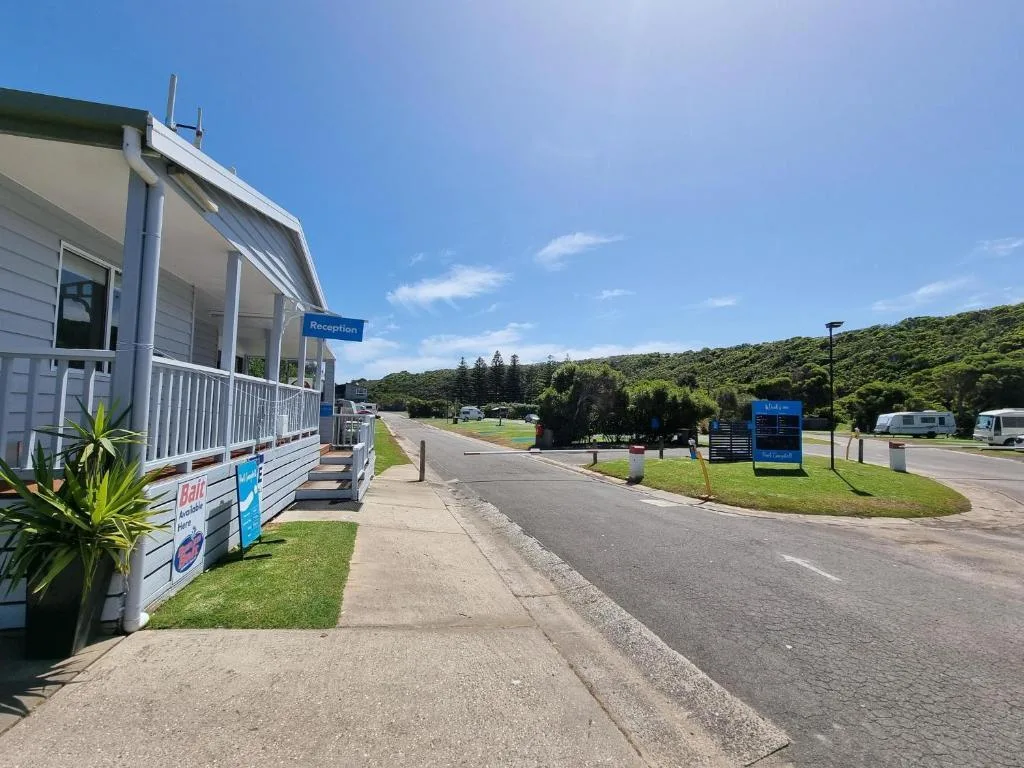
Bookings handled by our partner Parkbooker. We may earn a commission at no extra cost to you.
Gallery
Twelve Apostles in pictures.
4 images licensed from Wikimedia Commons
All images are sourced from Wikimedia Commons under Creative Commons licences. Individual photographers are credited on the source pages.
On the itinerary
Trip plans that include Twelve Apostles.
Scenic views
Lookouts near Twelve Apostles.
You may also like



Attribution
Sources & credits
Content (5)
- Wikipedia: Twelve Apostles · CC BY-SA 4.0
- Port Campbell National Park · Parks Victoria
- Twelve Apostles - Port Campbell National Park · Parks Victoria
- Gibson Steps · Parks Victoria
- Port Campbell visitor guide · Visit Victoria
Images (4)
- Peterborough (AU), Port Campbell National Park, Worm Bay --... · Dietmar Rabich · CC BY-SA 4.0
- Princetown (AU), Port Campbell National Park, Twelve Apostle... · Dietmar Rabich · CC BY-SA 4.0
- Princetown (AU), Port Campbell National Park, Twelve Apostle... · Dietmar Rabich · CC BY-SA 4.0
- Princetown (AU), Port Campbell National Park, Twelve Apostle... · Dietmar Rabich · CC BY-SA 4.0
,_Port_Campbell_National_Park,_Worm_Bay_--_2019_--_0863.jpg)
,_Port_Campbell_National_Park,_Twelve_Apostles_--_2019_--_0930.jpg)
,_Port_Campbell_National_Park,_Twelve_Apostles_--_2019_--_0969.jpg)
,_Port_Campbell_National_Park,_Twelve_Apostles_--_2019_--_0969_(bw).jpg)
Images sourced from Wikimedia Commons under licenses that permit commercial use. If you are the rights holder and believe an attribution is incorrect, please contact us.